

Past Events
Past Events
Turkey's Role in a Reordering World
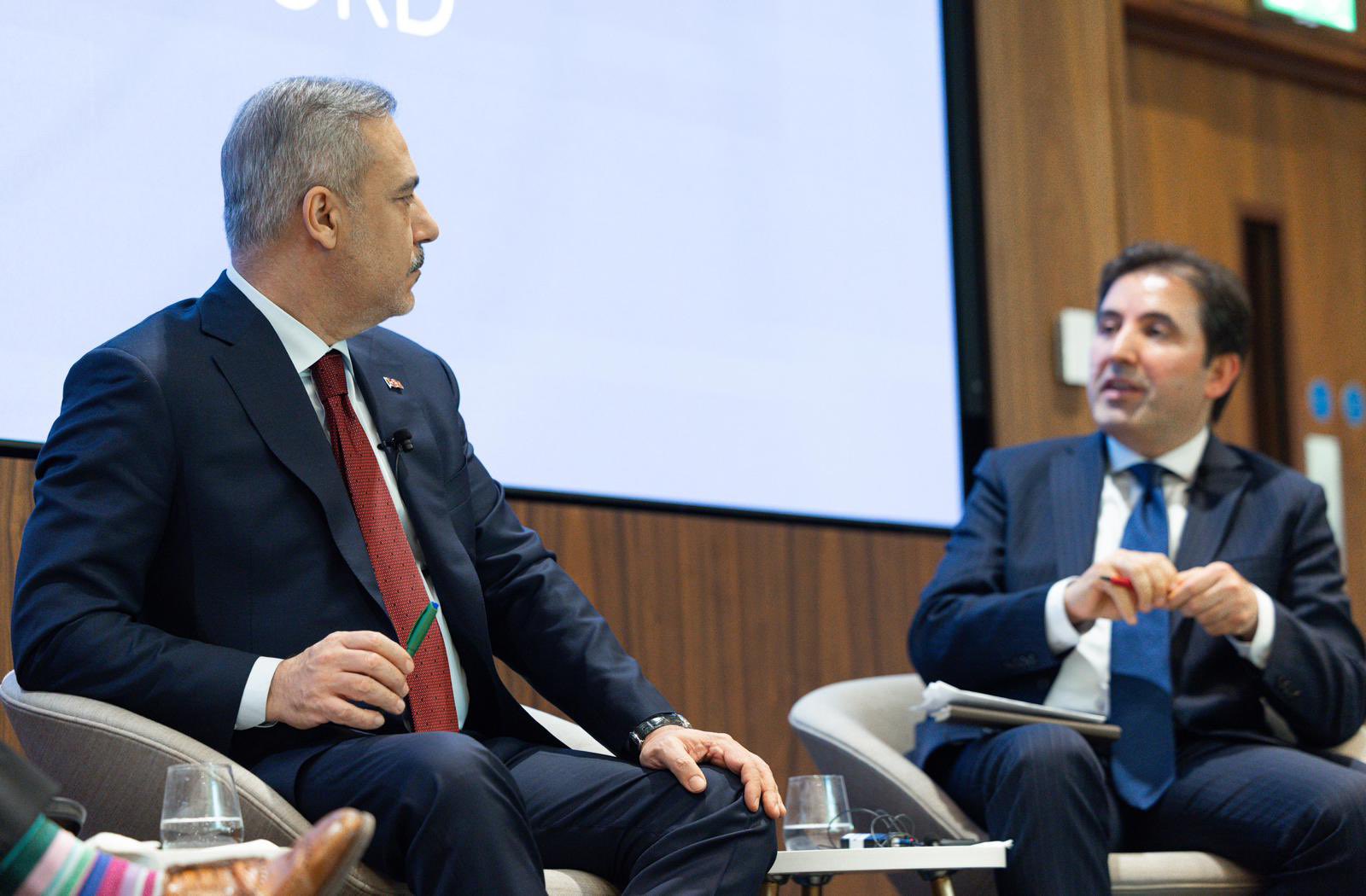
Lecture and Panel Discussion
Abstract
The transformation of the international order is reshaping the position and agency of states across the globe. As the post-Cold War framework fragments and new centres of gravity emerge, middle powers with deep strategic traditions and demonstrated diplomatic capacity are playing an increasingly consequential role in managing the transition.
In this lecture, Minister Fidan addressed Turkey's foreign policy in this moment of structural change, exploring how Ankara has positioned itself as a diplomatic bridge-builder across multiple concurrent crises — including the Iran–US conflict, the war in Ukraine, and the situation in Gaza. He discussed Turkey's approach to mediation, its relationships across competing blocs, and its vision for a more stable and representative international order. A panel discussion followed the lecture.
About the Speaker
Hakan Fidan has served as Minister of Foreign Affairs of the Republic of Turkey since 2023. Prior to his ministerial appointment, he served as Undersecretary of the National Intelligence Organisation (MİT) from 2010 to 2023, during which time he played a central role in shaping Turkey's intelligence strategy and external relations. He has been closely involved in Turkey's diplomatic engagements across the Middle East, Eurasia, and beyond, and has represented Ankara in a range of sensitive multilateral negotiations.
Minister Fidan holds a PhD in Political Science from Bilkent University and has authored academic work on energy security and Turkish foreign policy. His visit to Oxford took place during a two-day trip to the United Kingdom, in the course of which Turkey and the UK formalised a new strategic partnership agreement.
Video Recording
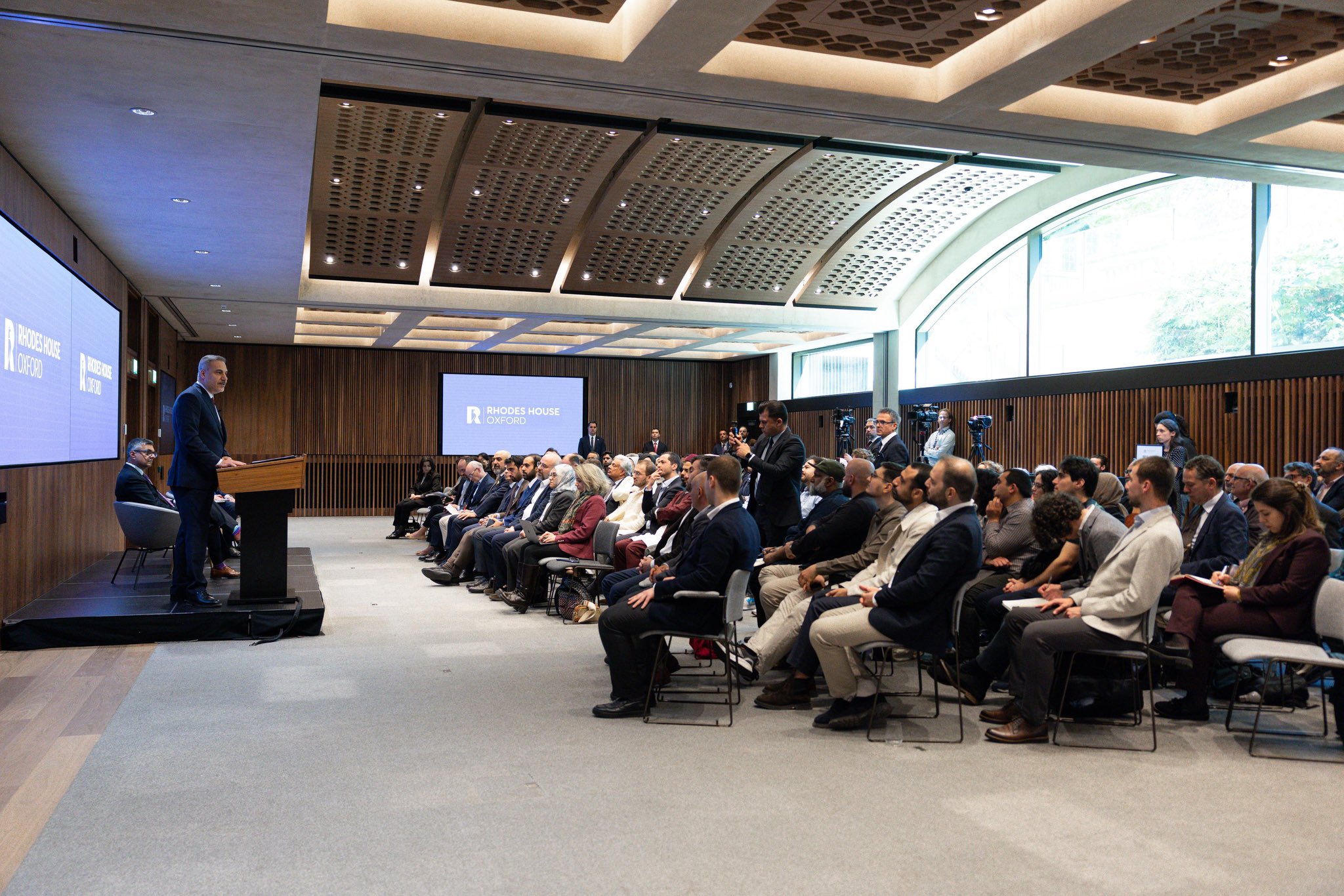
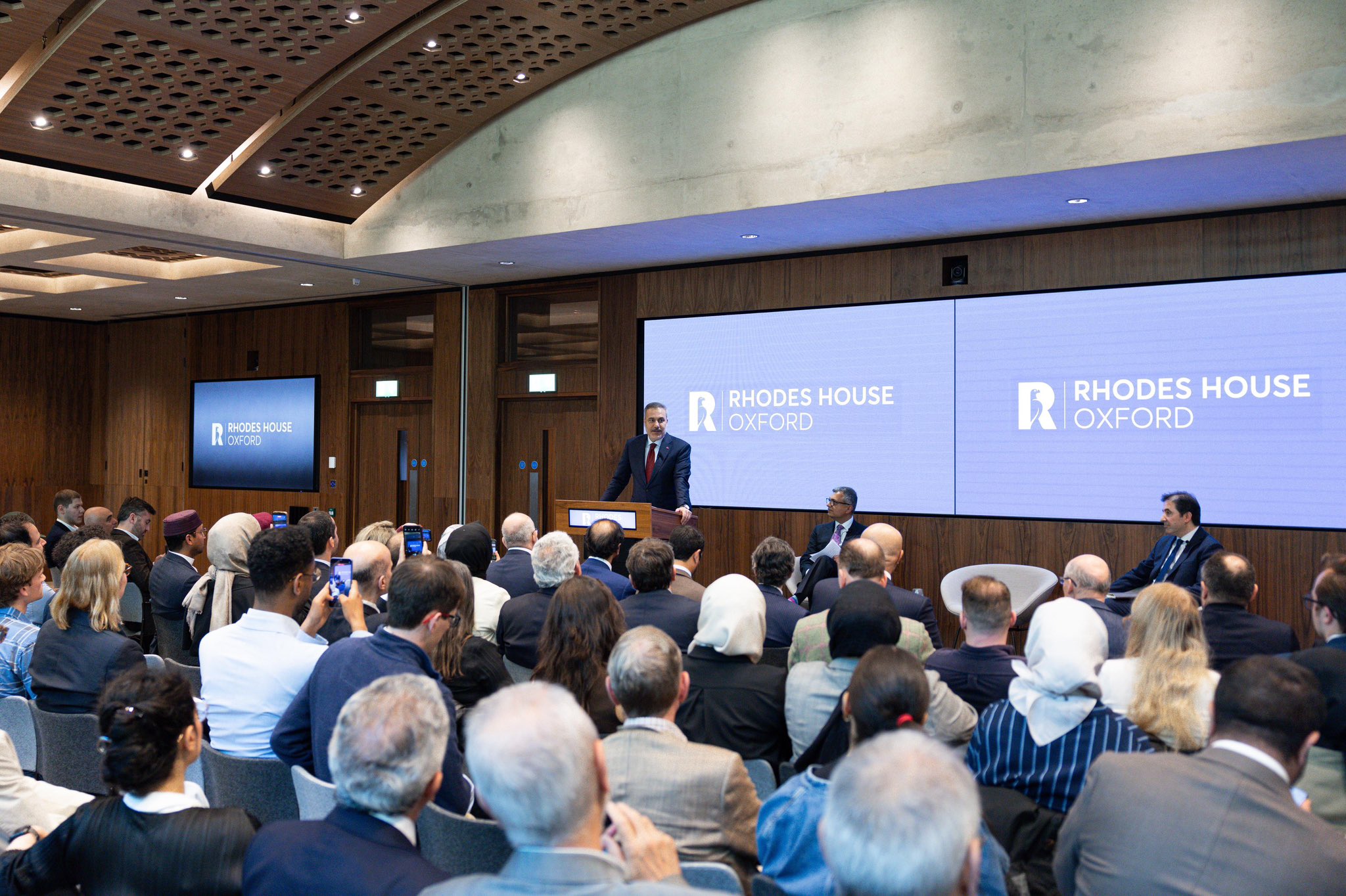
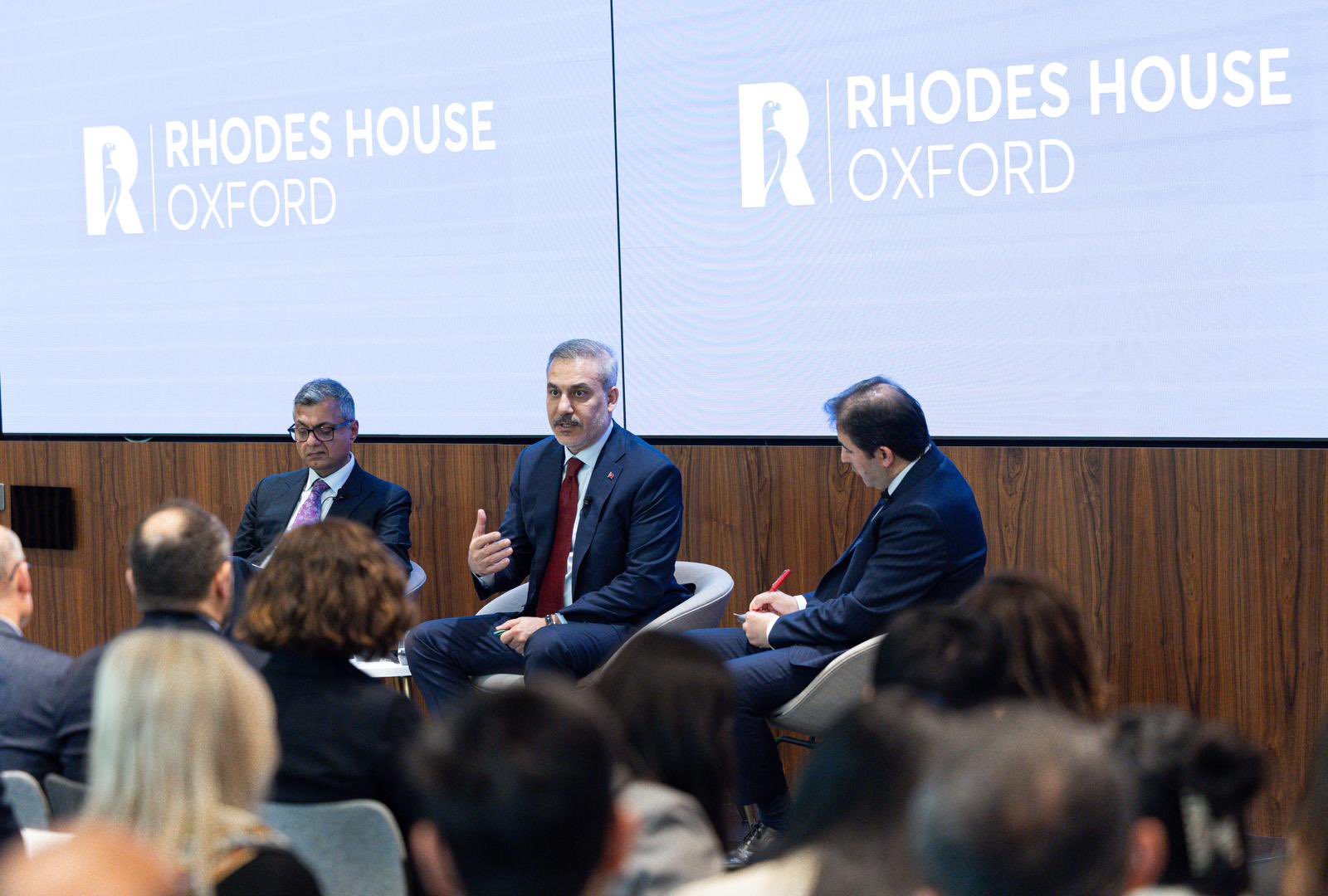
Event Gallery
Photos from the lecture and panel discussion at Rhodes House.
50th Anniversary of the Helsinki Final Act
Roundtable
Abstract
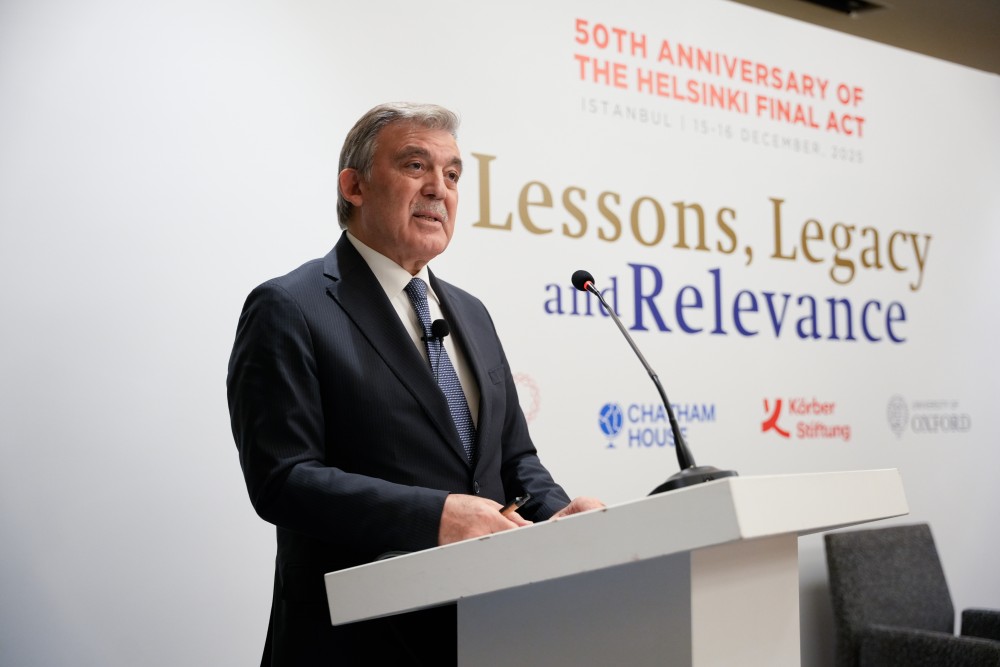
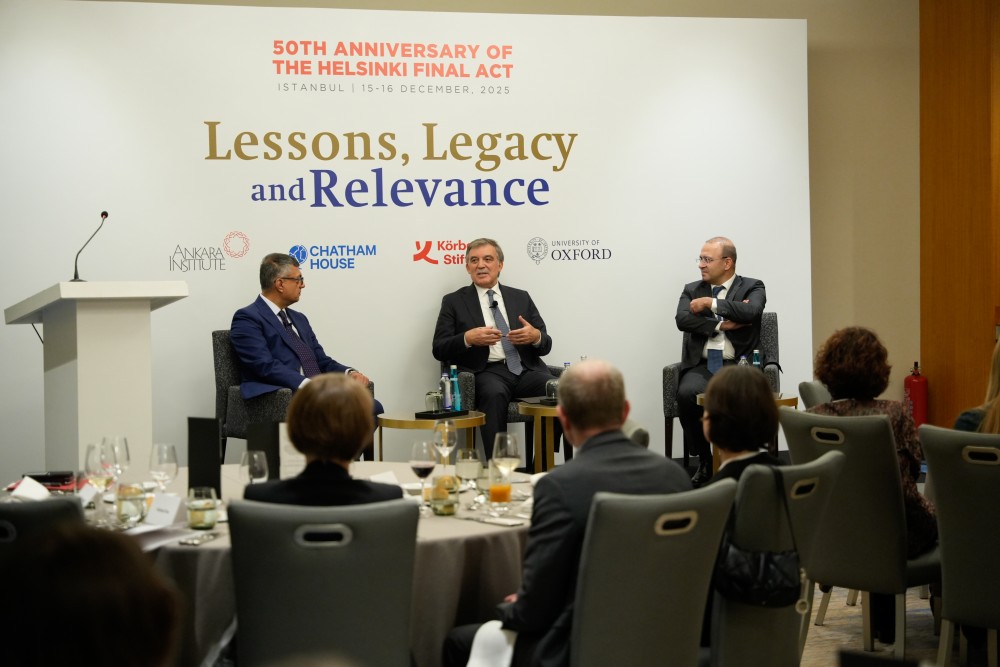
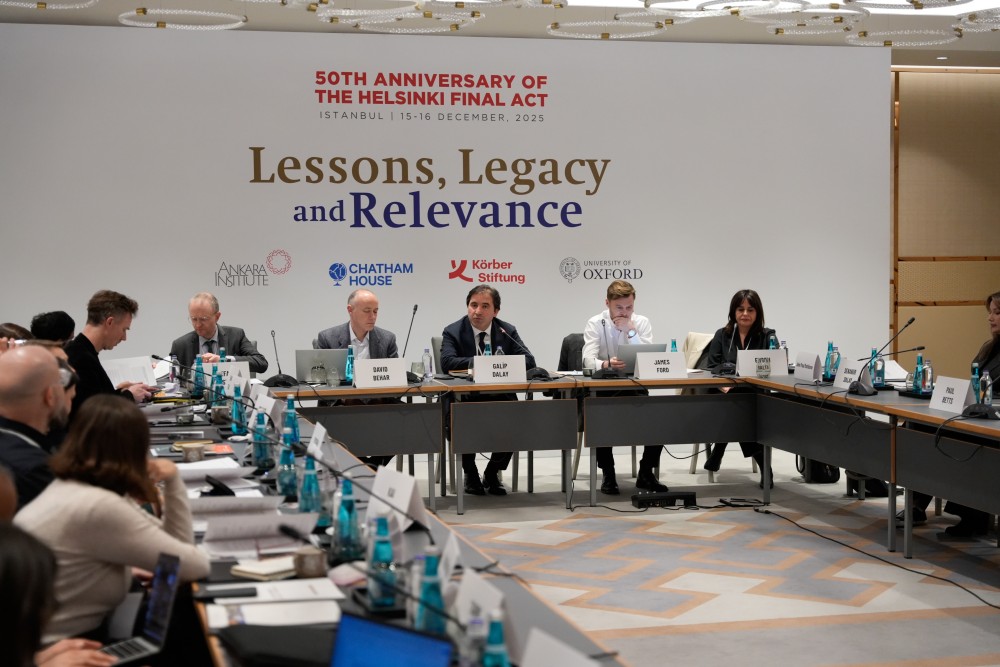
On the occasion of the 50th anniversary of the Helsinki Final Act, the roundtable, co-organised by Oxford University (Programme on Global Orders), Körber-Stiftung, Chatham House, and Ankara Institute, will revisit the Helsinki principles—sovereignty, territorial integrity, and non-interference—and explore how they resonate in today's multipolar world.
The discussion will draw on the "Helsinki Spirit," where linking mutual security to respect for human rights helped erode the Iron Curtain and lay the groundwork for the peaceful end of the Cold War.
Agenda
This session will focus on the context that facilitated the Helsinki Final Act as well as the significance and implications of these accords.
- What were the driving factors that led to the launch of Helsinki diplomacy?
- What goals did the leading actors of Helsinki diplomacy seek to achieve?
- What were the necessary systemic and contextual factors that enabled the Helsinki Process and the Final Act?
- What is the historical and contemporary significance of the Helsinki Final Act (Accords)?
- What role did civil society and human-rights actors play in this process?
- What were the immediate and long-term implications of the Act?
This session will focus on the features and processes of the diplomacy that culminated in the Helsinki Final Act.
- What were the unique features of the Helsinki diplomacy?
- What did the terms like "Helsinki effect" and/or "Helsinki Spirit" signify? How relevant are they for today's world?
- What has been its legacy?
- How did this process redefine civil, political and security landscape of Europe?
- How particular or global is the Helsinki experience?
Learning from the past, shaping the present
This session will focus on what a diplomatic settlement should look like and the preconditions it entails.
- What are the relevant lessons of the Helsinki Process for Ukraine diplomacy?
- What should be the structure and goal of international diplomacy to deliver a settlement in Ukraine?
- Which international institution or mechanism can play an effective role in such a diplomacy?
- What preconditions need to be met for a ceasefire, and then for a settlement, in Ukraine?
- What should this settlement entail?
- What should be the overarching goals of such a diplomacy and settlement?
This session will focus on how the question of European security, the place of Russia and the US, and security guarantees are evolving.
- What are the priorities of major stakeholders (the US, EU, UK, and Turkey) in any diplomatic settlement in Ukraine?
- What should be the nature and goal of their engagement with Russia?
- What is the "coalition of the willing" trying to achieve? How able is this grouping?
- What security guarantees can major European actors and the US offer to Ukraine?
- What are the likely scenarios in European-Russian relations as well as the US-Russian relations?
Event Gallery
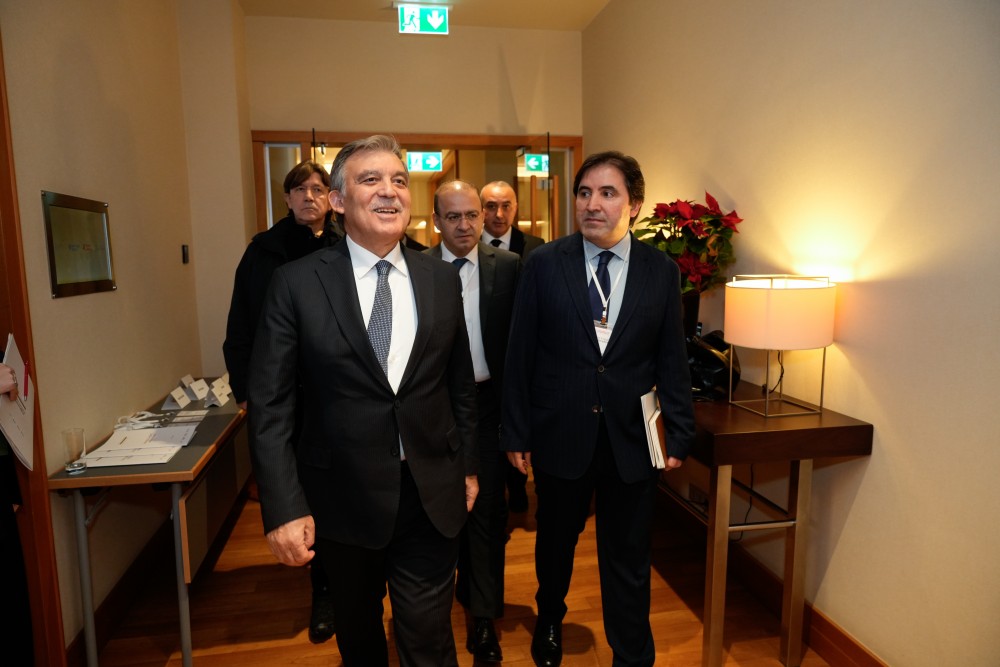
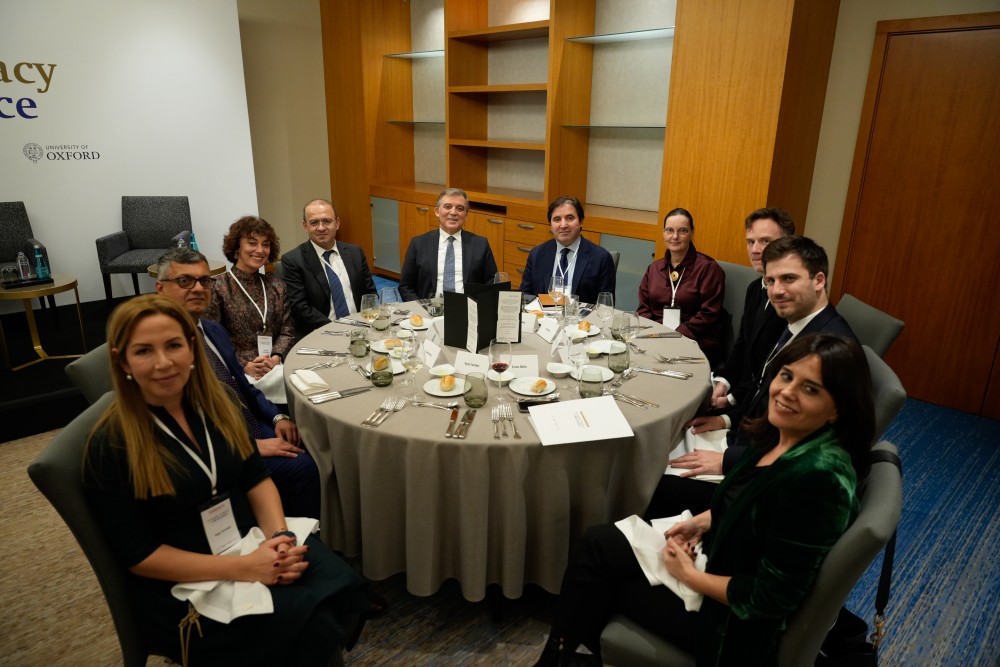
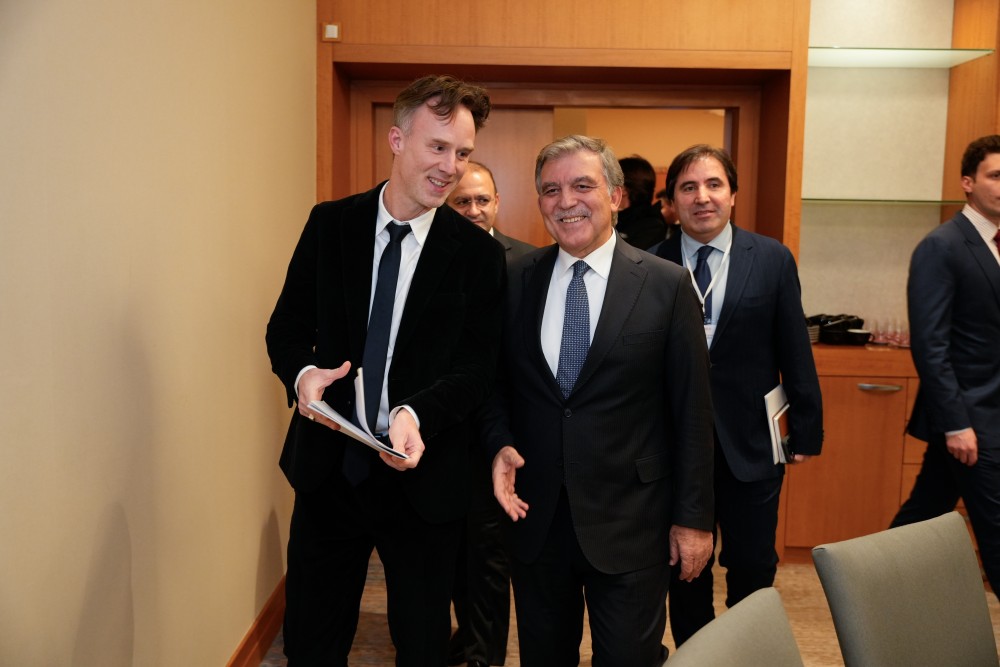
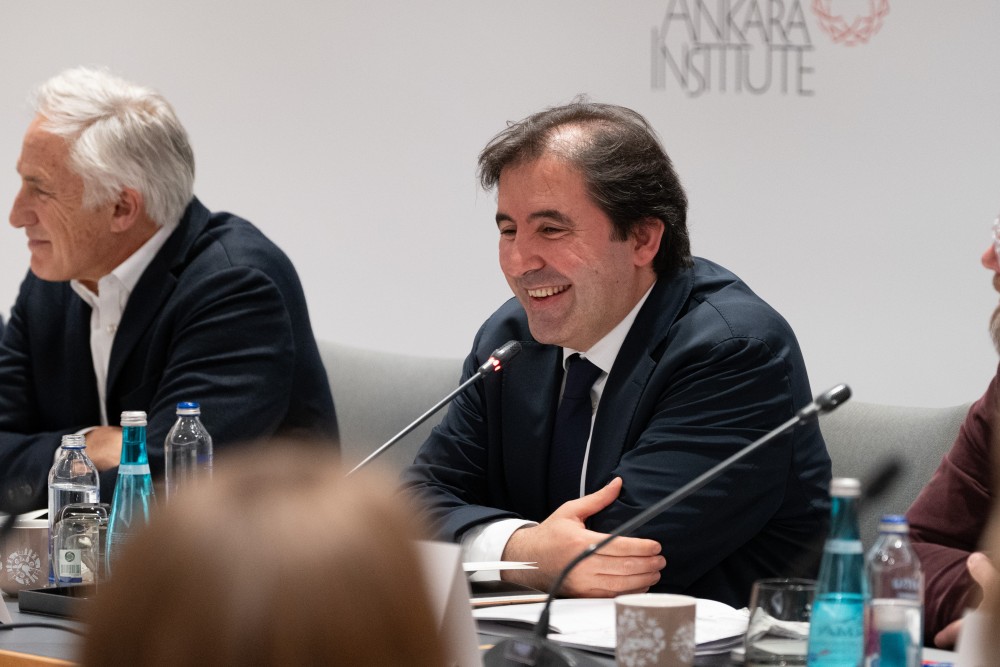
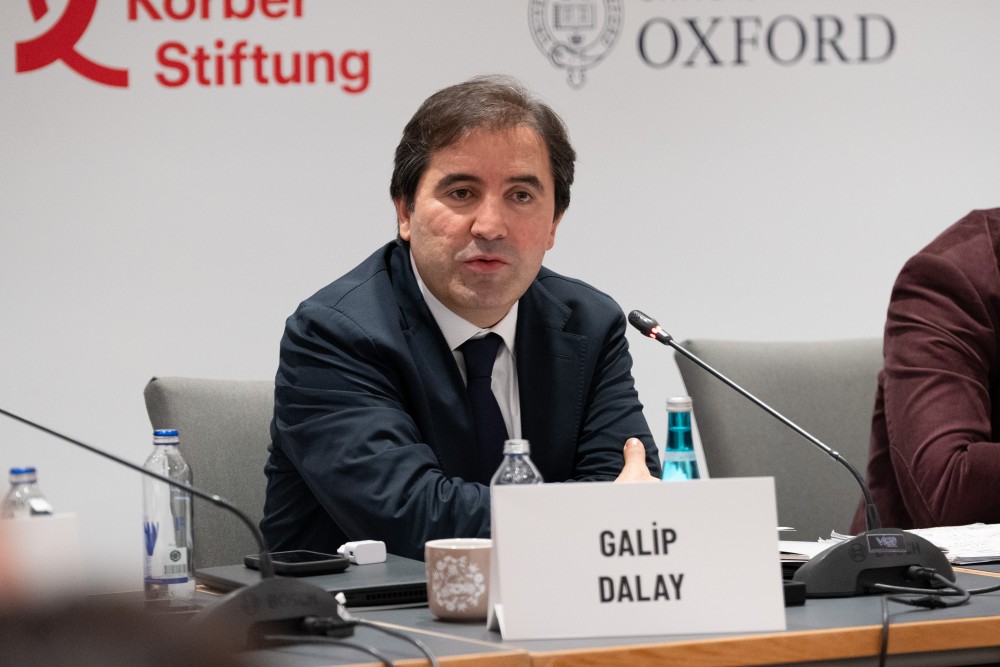
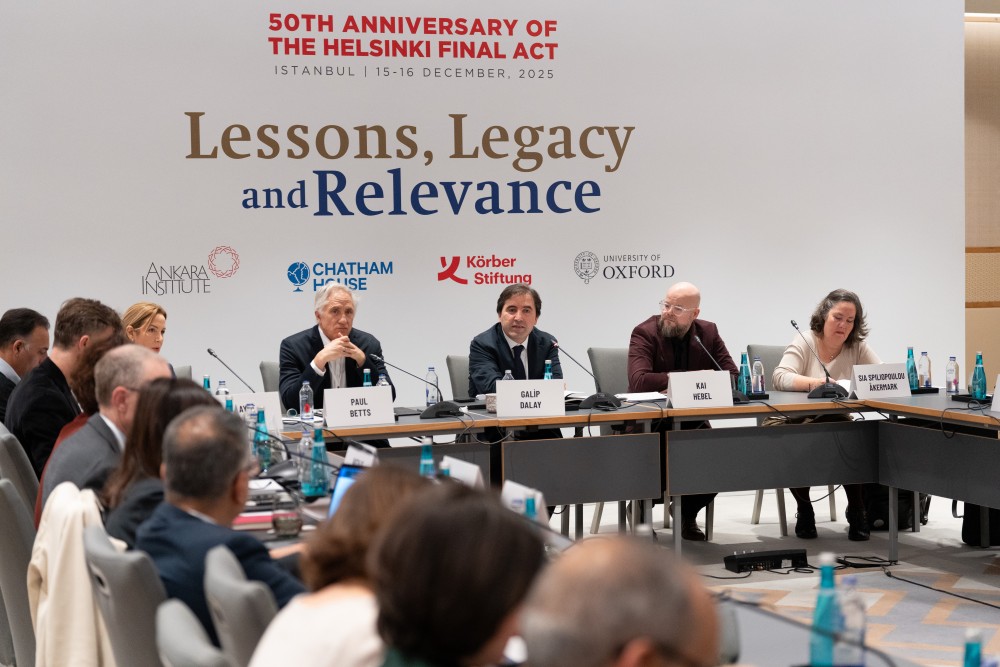
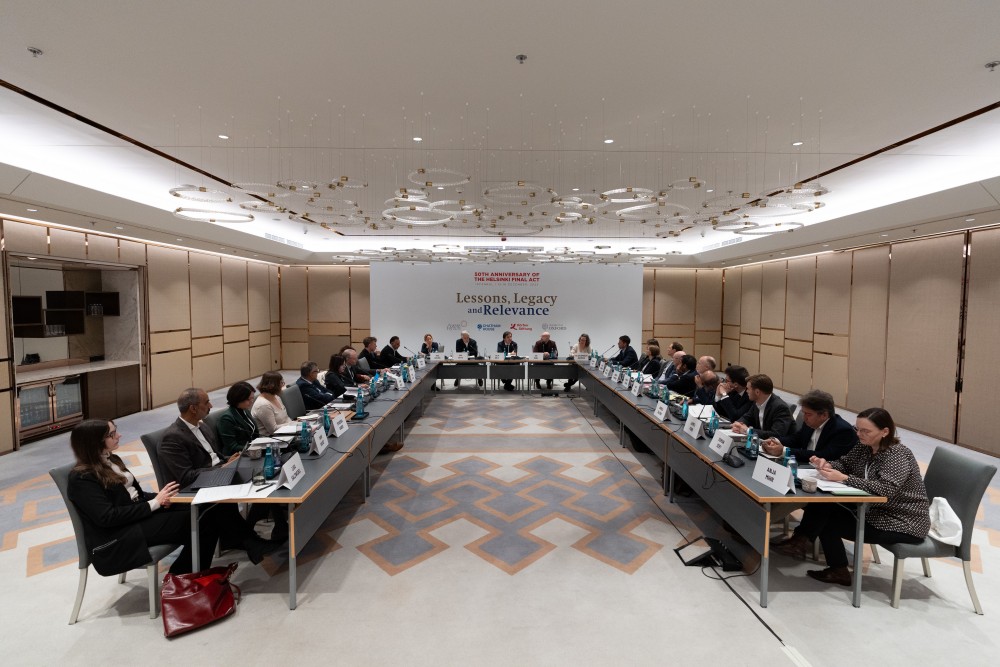
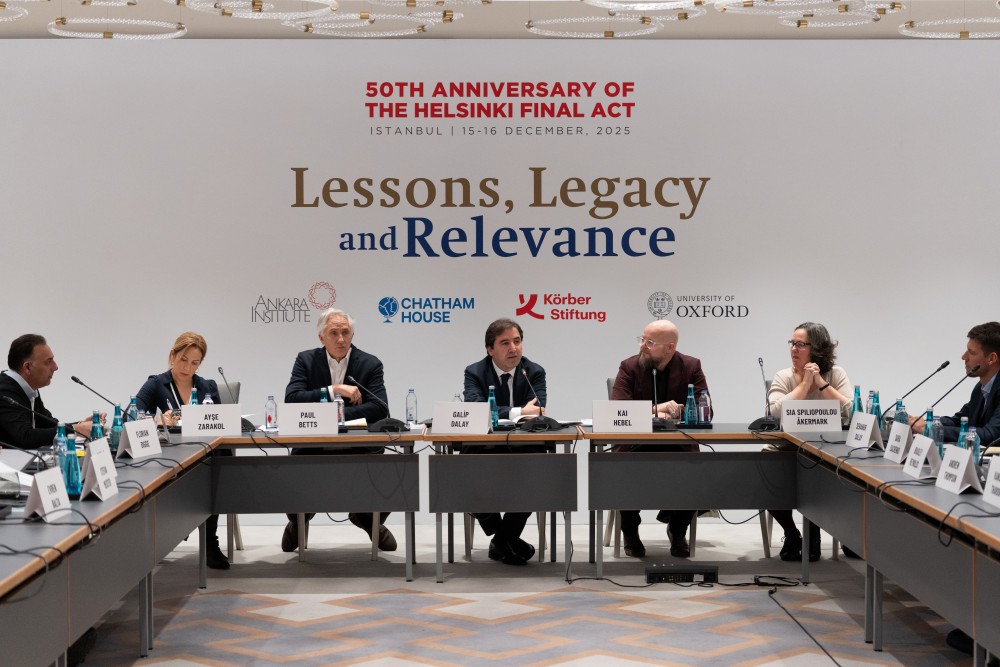
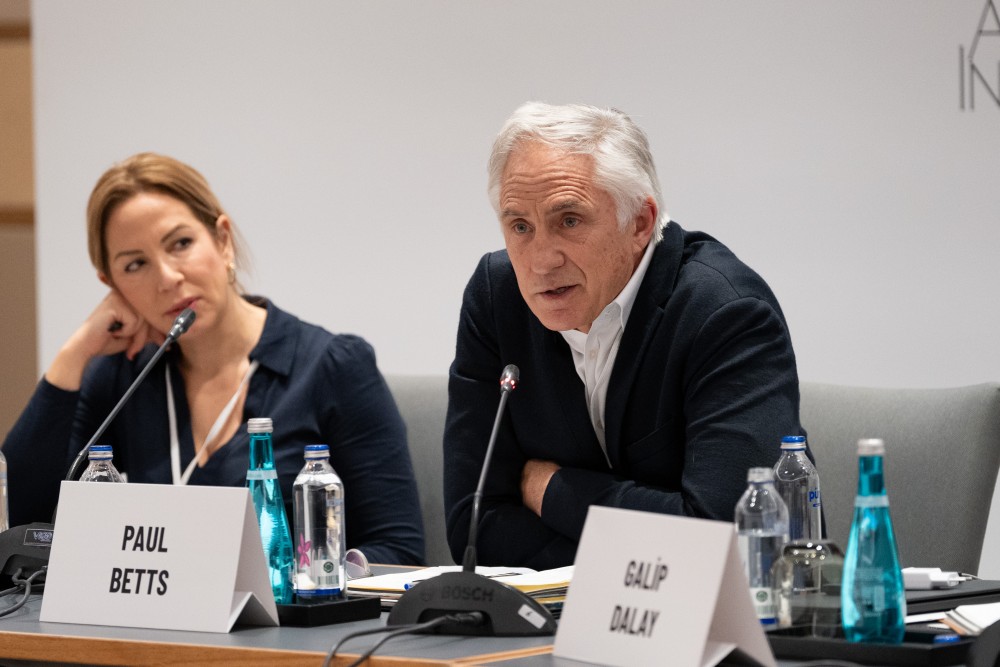
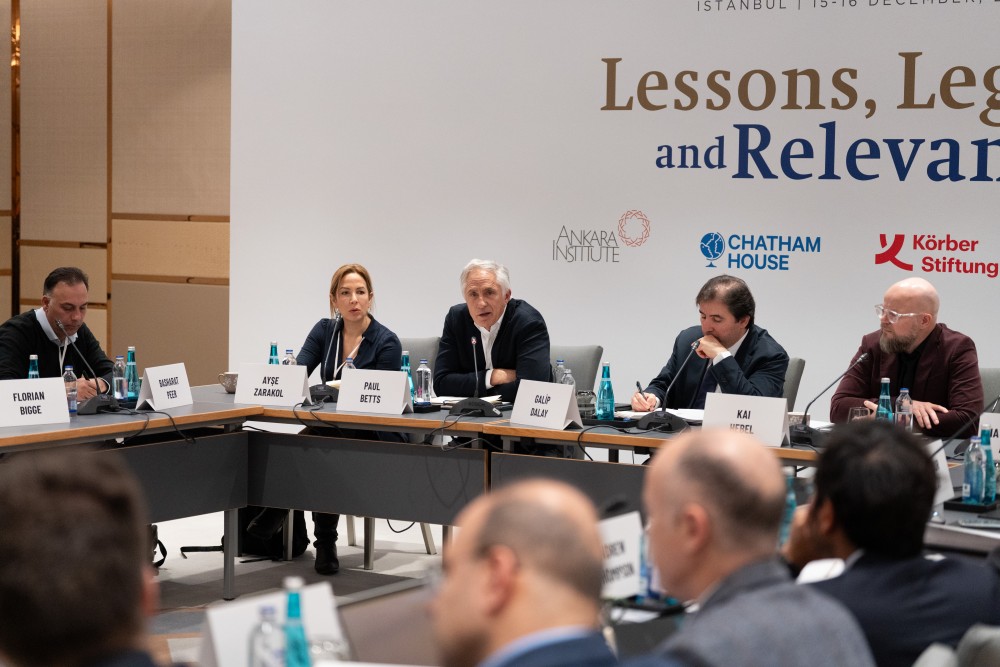
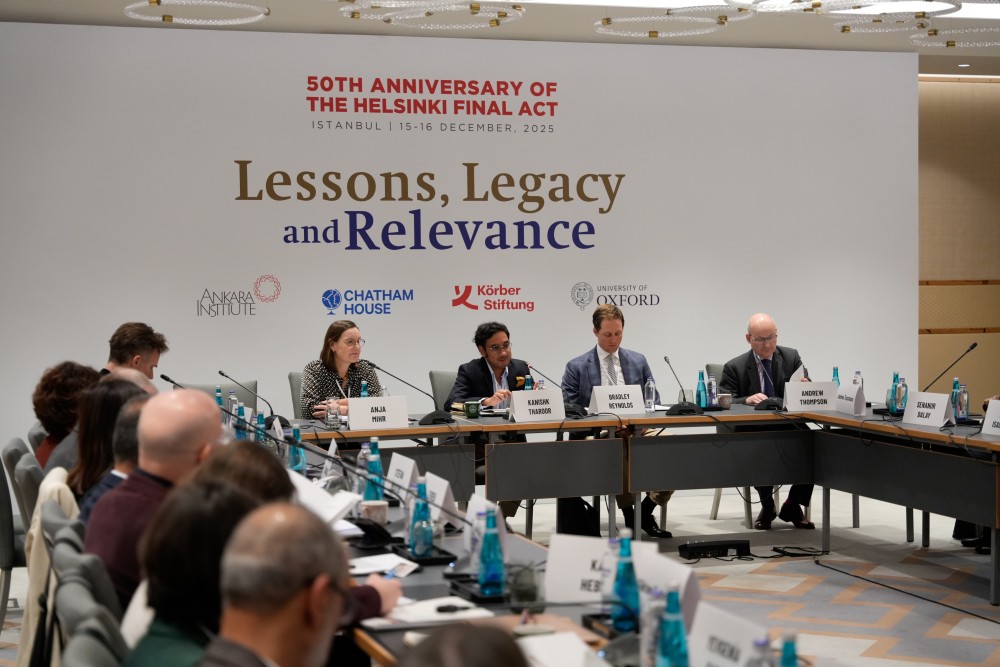
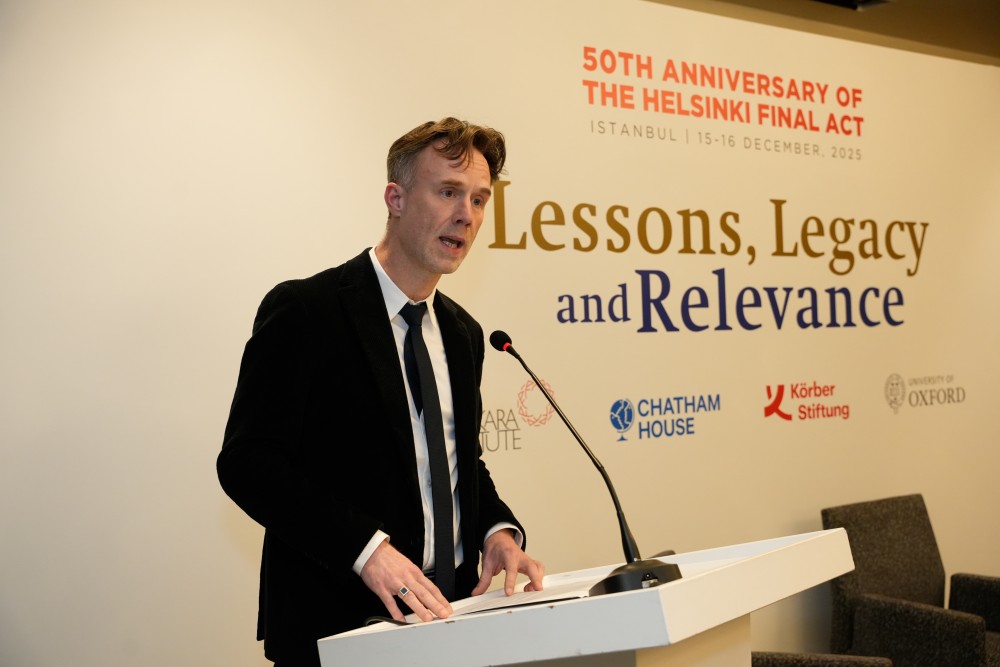
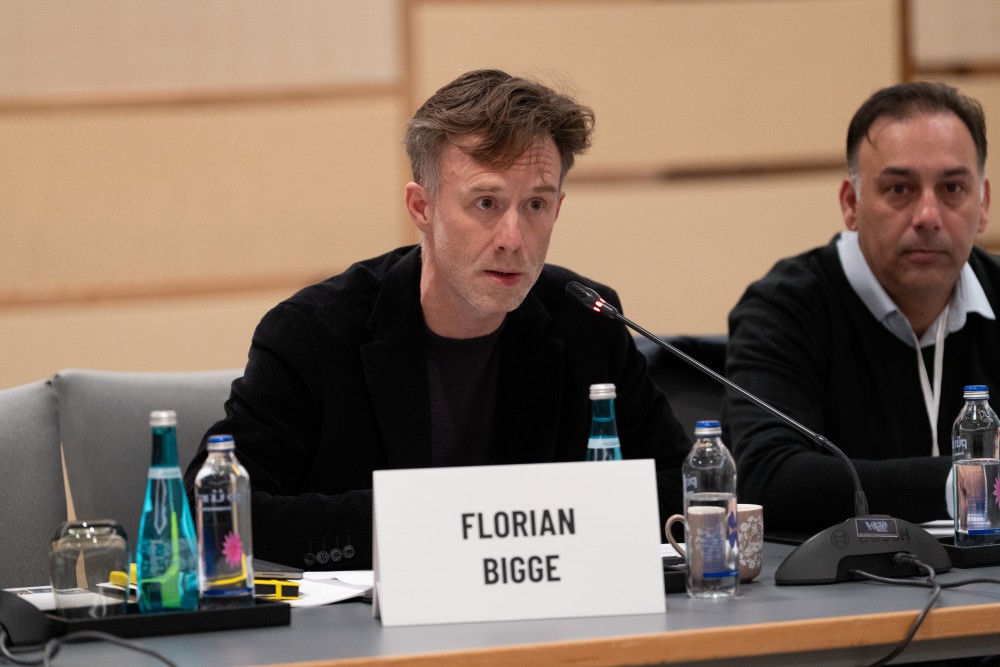
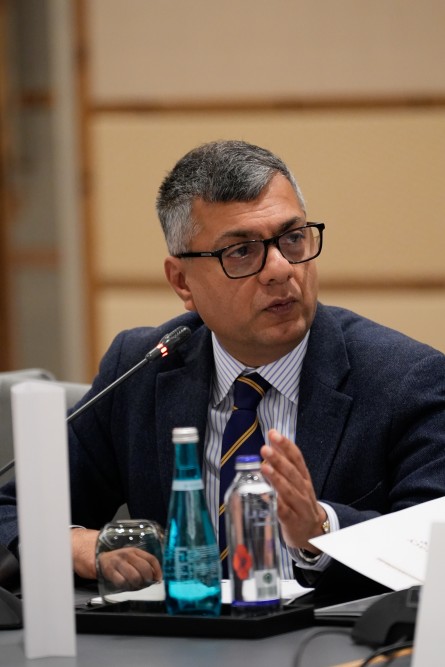
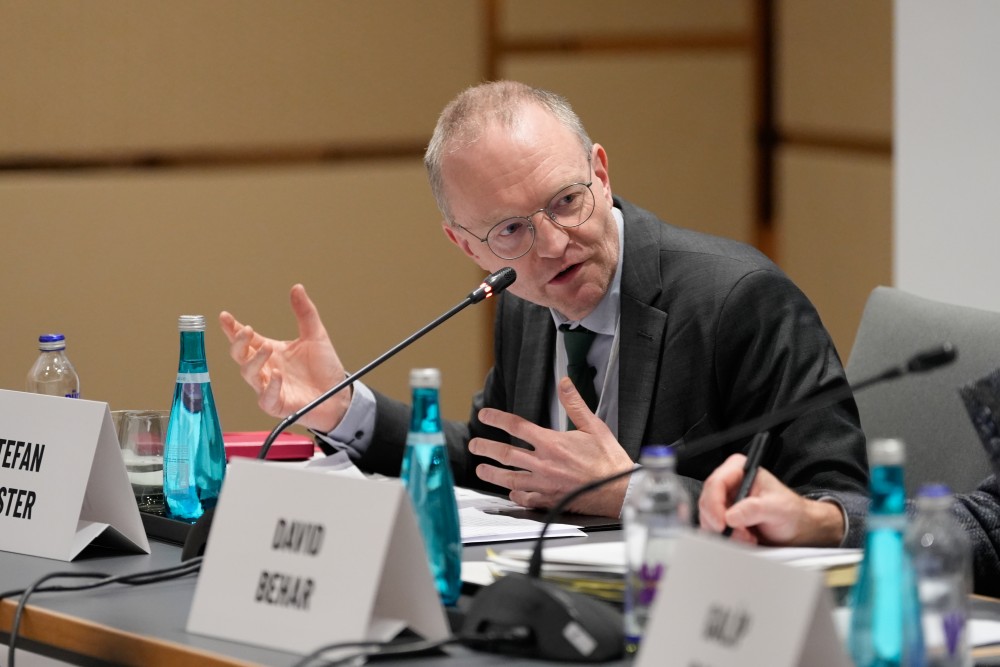
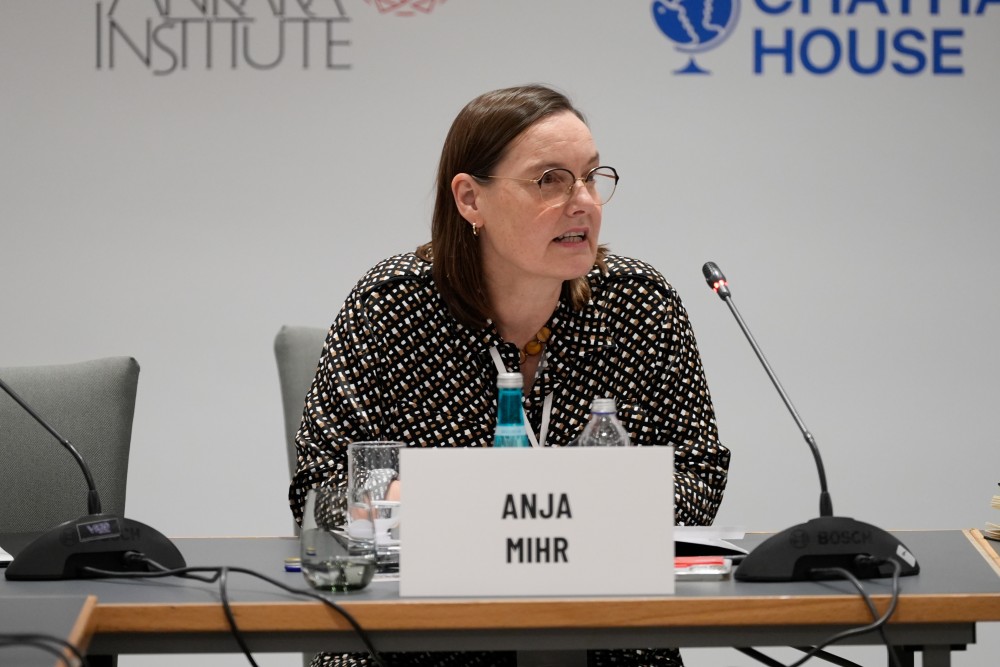
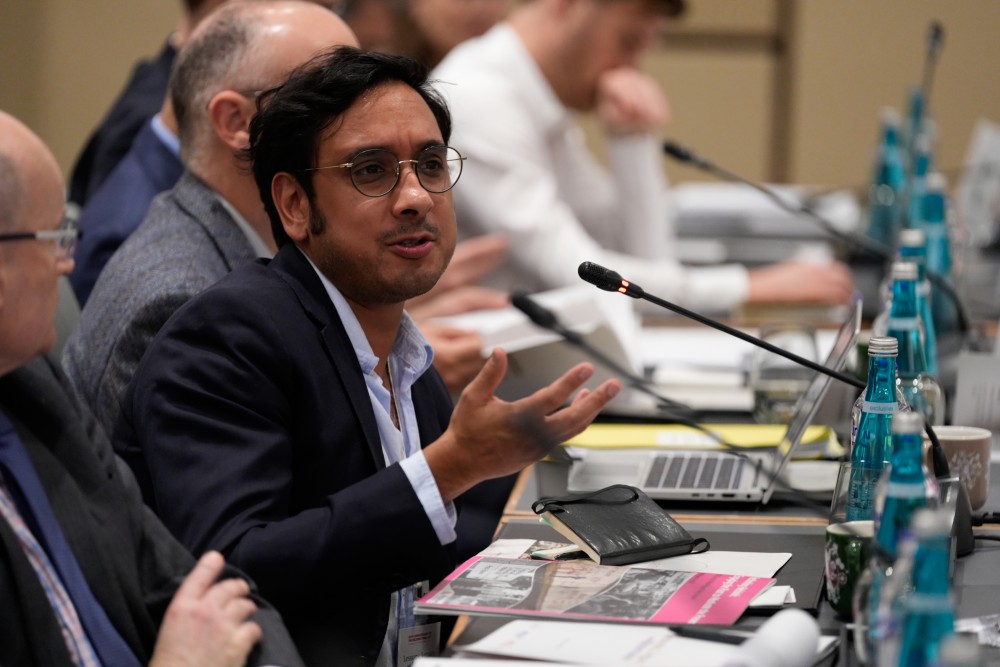
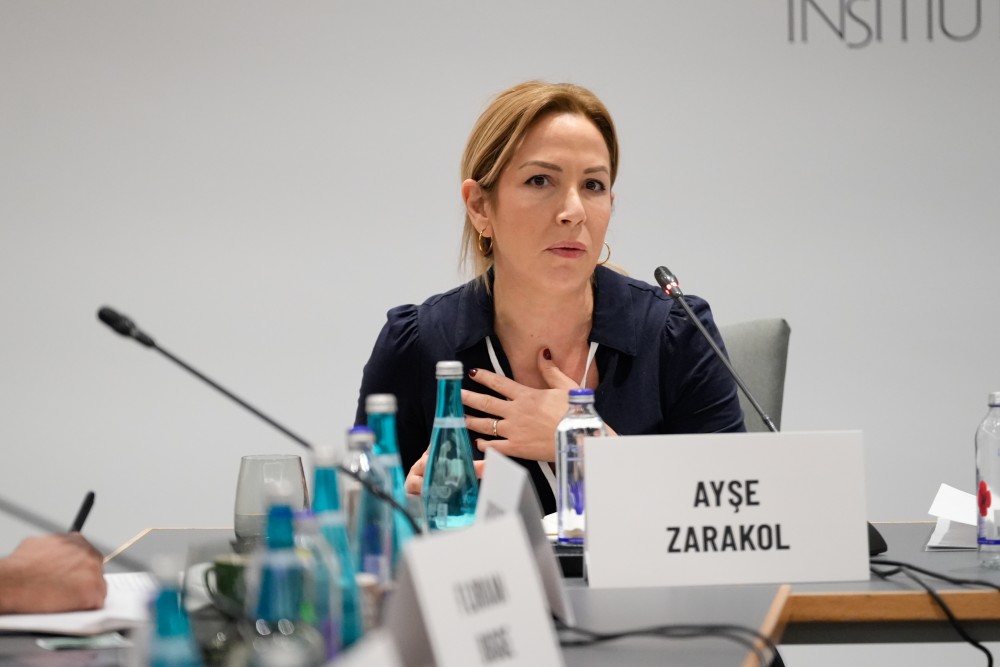
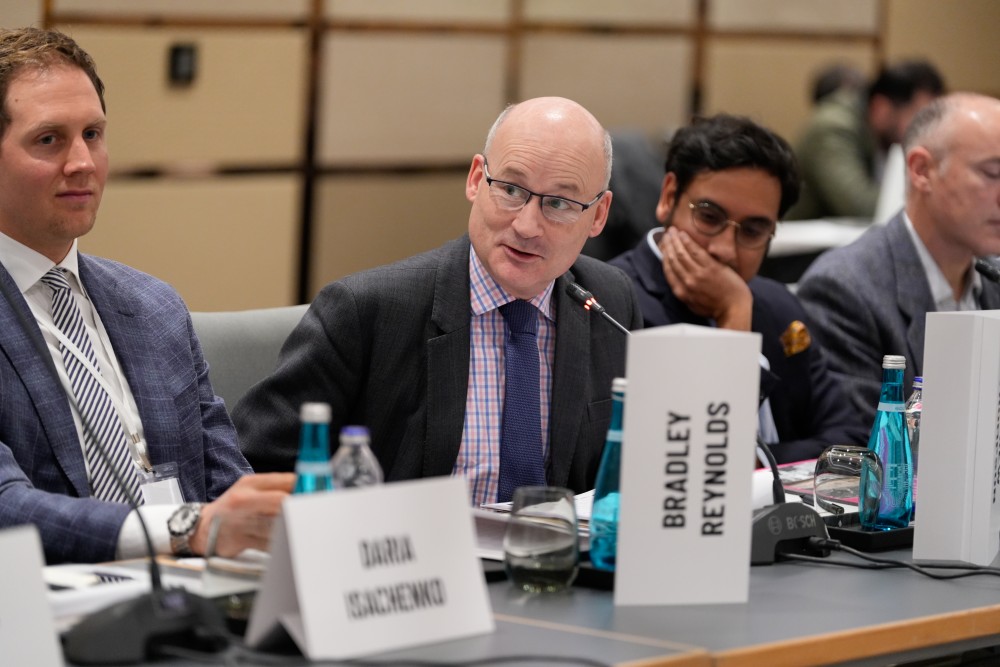
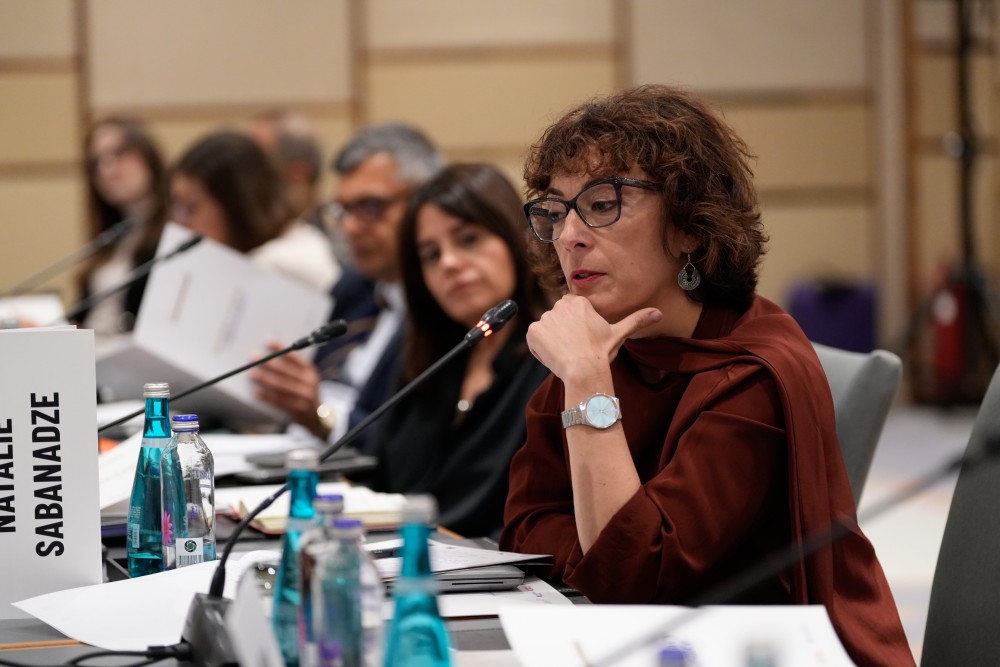
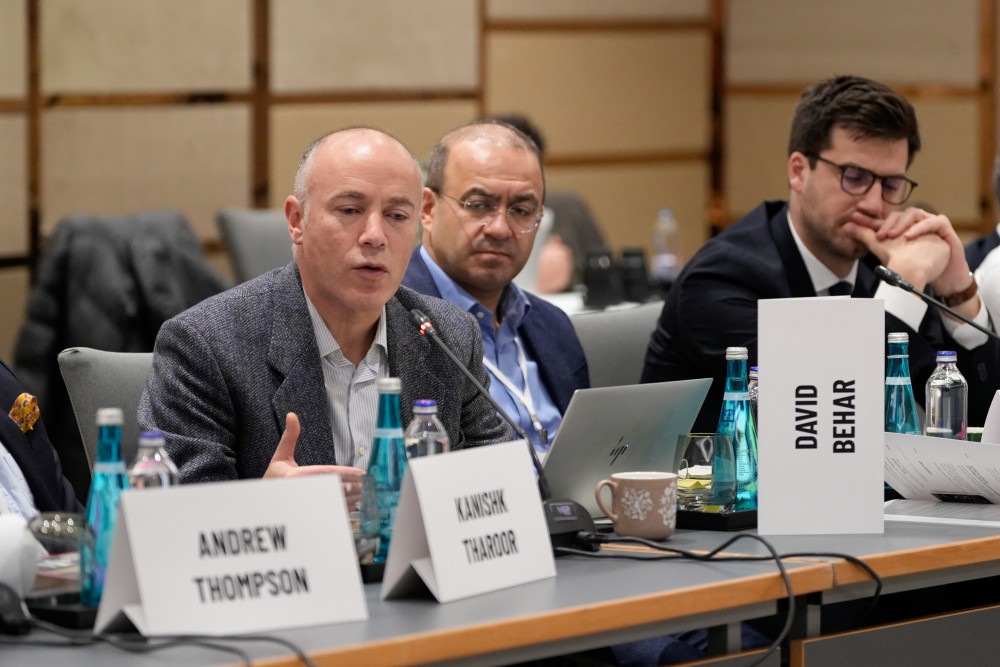
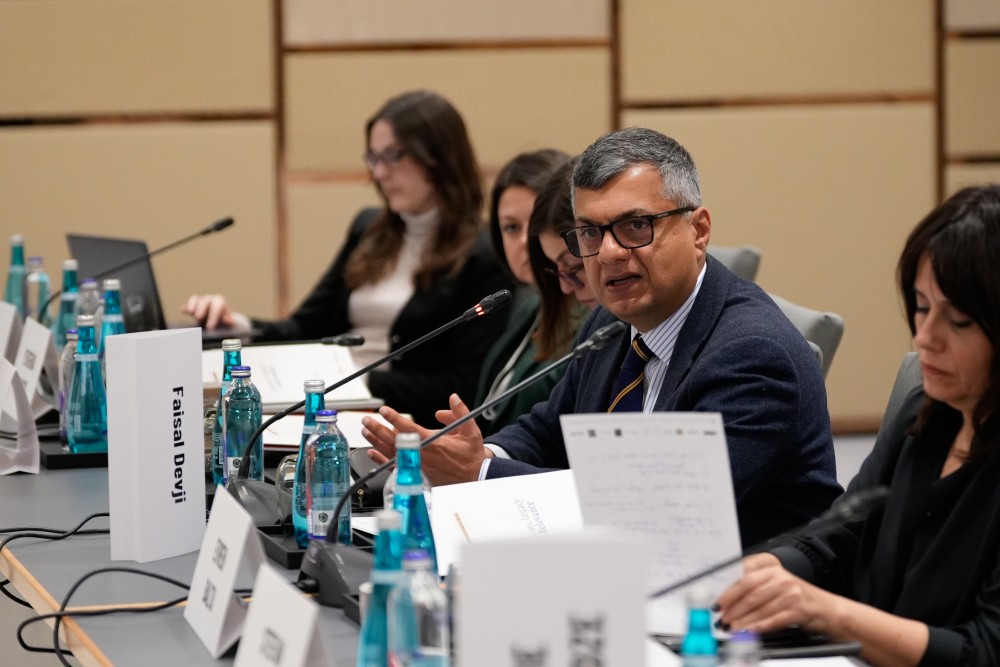
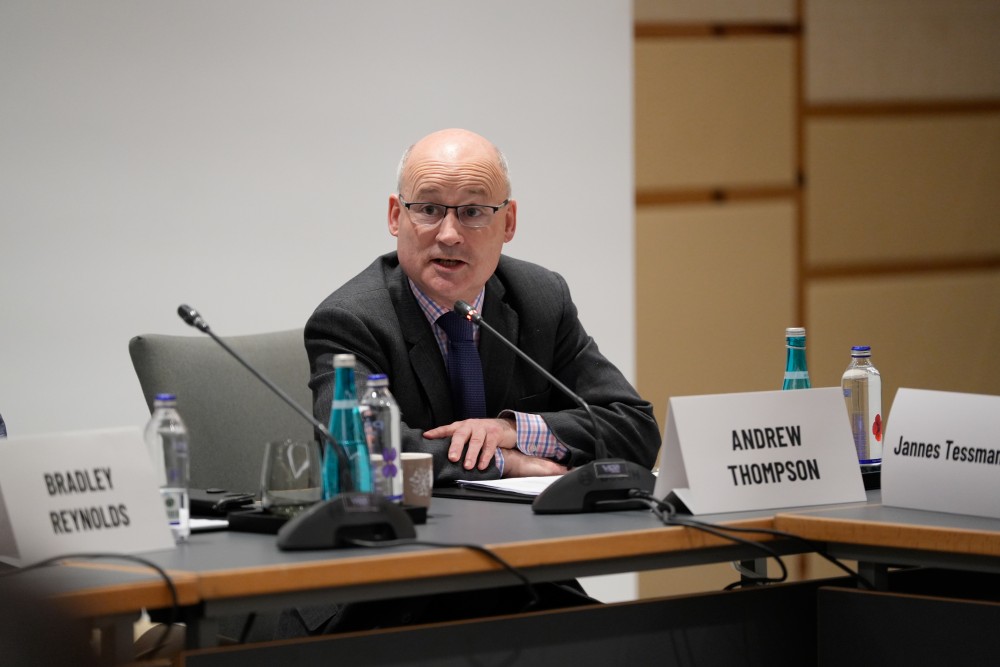
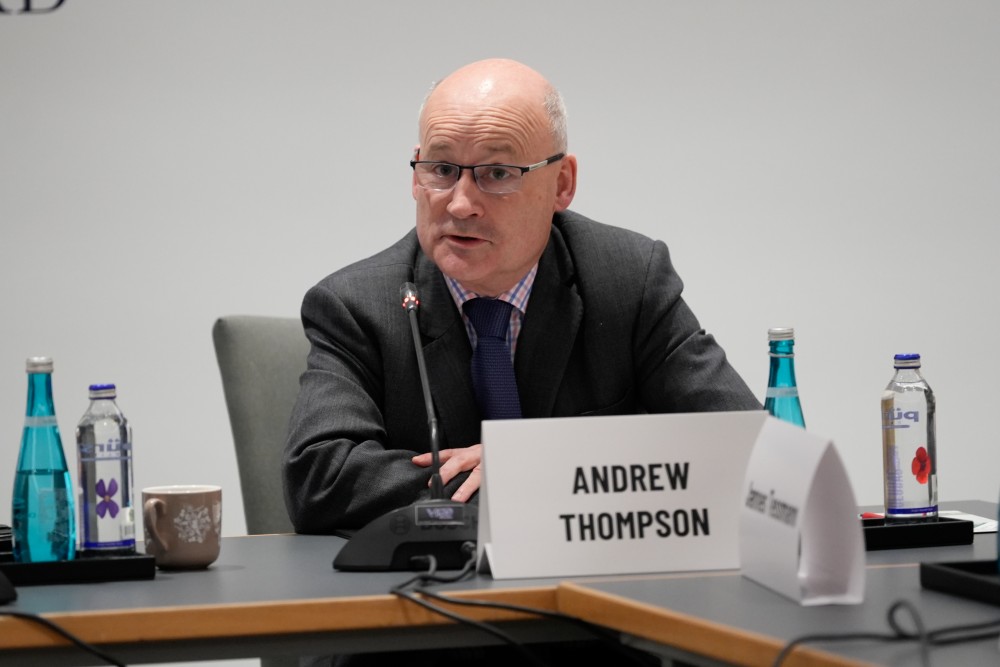
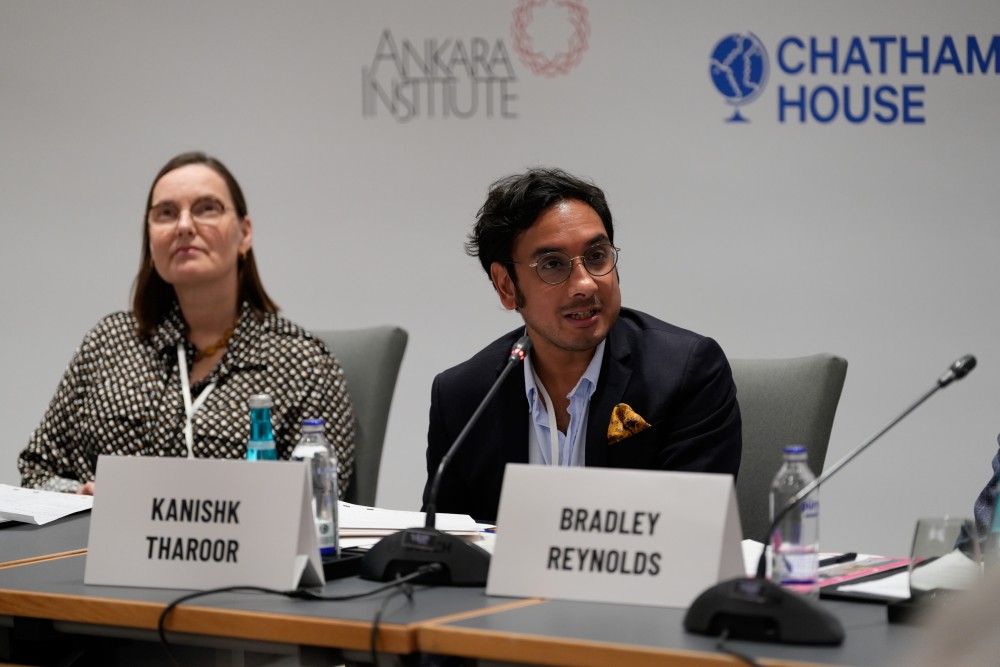
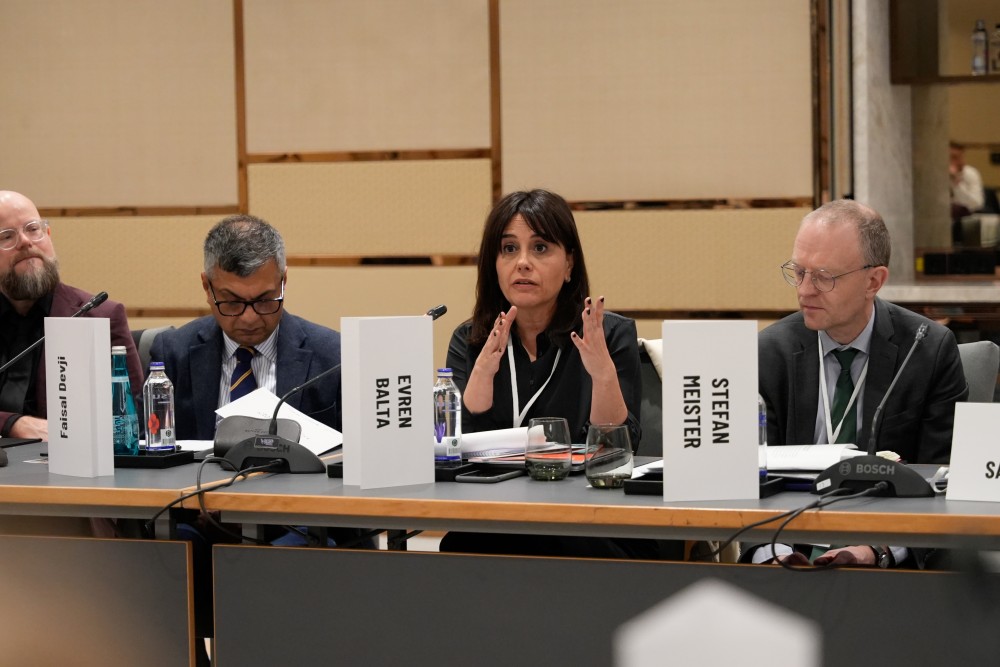
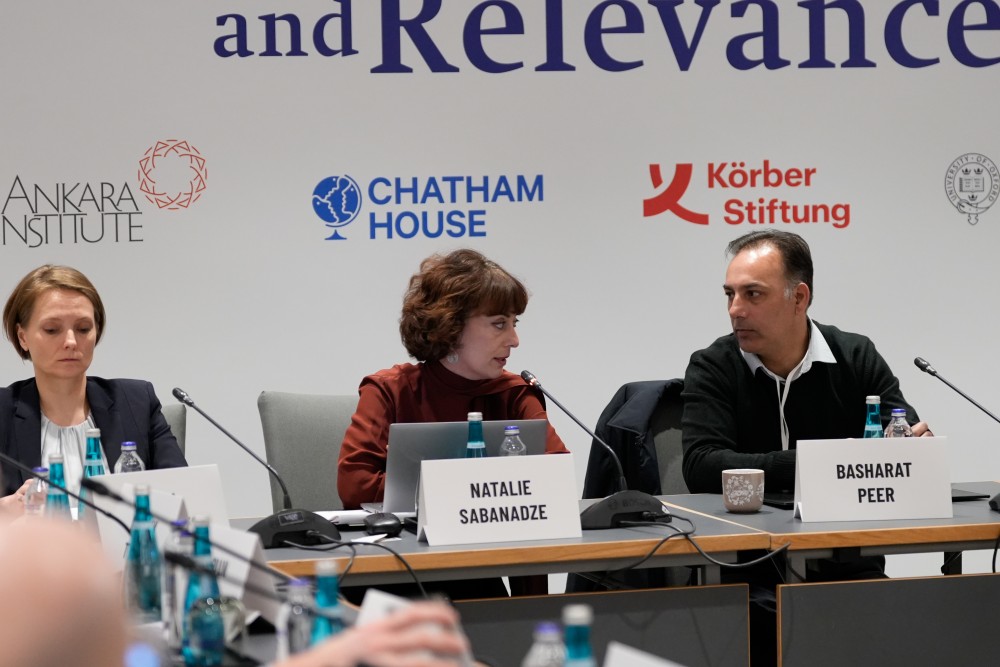
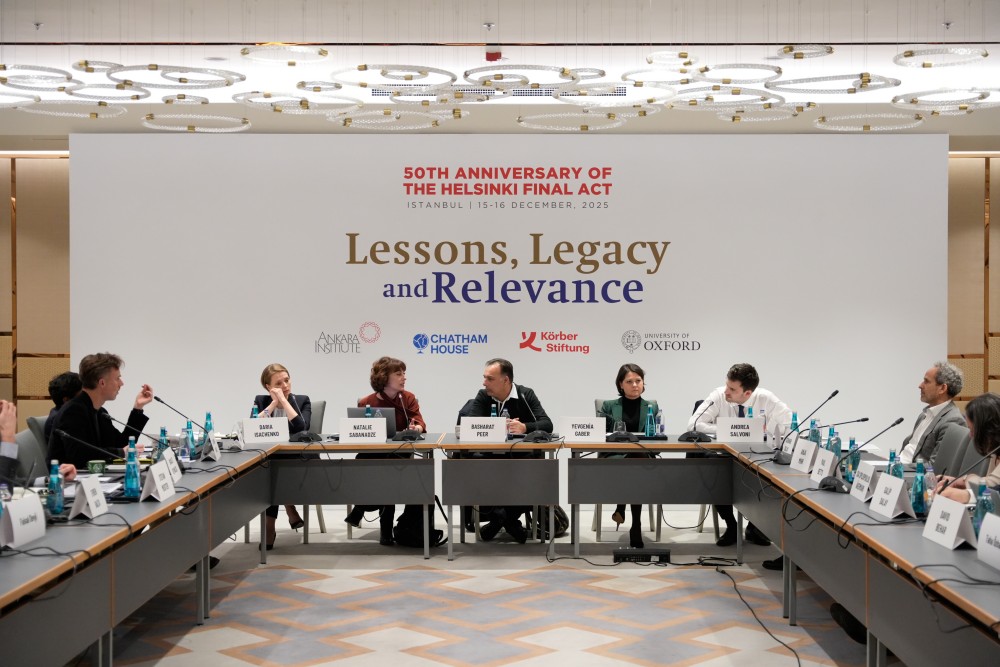
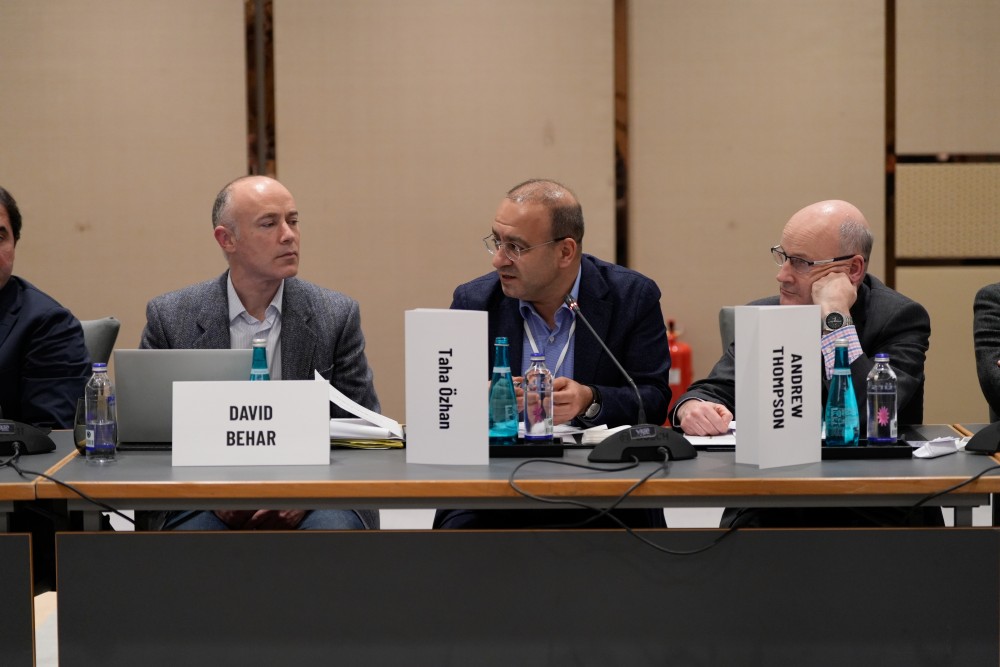
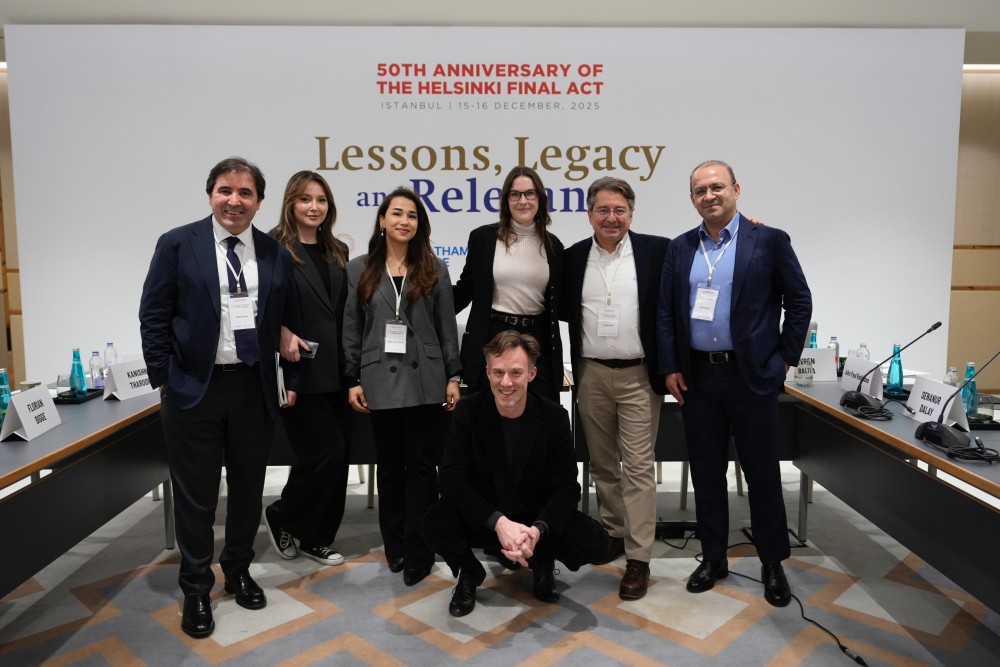
Photos from the roundtable sessions in Istanbul.
Brazil in a Changing Global Order
Seminar
Abstract
The global order is undergoing a systemic change. This change redefines the position and role of each country and region in the world. At a time when power politics and the logic of great power competition underpin international politics, middle powers such as Brazil have emerged as major proponents of multilateralism and its reform.
In the seminar, Ambassador Patriota will focus on how Brazil view the ongoing global transformation. What sorts of changes and reforms does Brazil advocate at regional and global levels? What new perspectives and approaches does Brazil offer to address major international crises, such as Ukraine and Gaza, as well as reforming global governance?
About the speaker
Antonio de Aguiar Patriota was appointed Ambassador of Brazil to the United Kingdom of Great Britain and Northern Ireland in 2023. He previously served as Ambassador of Brazil to the Arab Republic of Egypt (2019–2023) and to Italy (2016–2019), as well as Permanent Representative to the United Nations in New York (2013–2016). He also held the positions of Minister of Foreign Affairs (2011–2013), Secretary-General of Foreign Affairs (2009–2010), and Ambassador to the United States (2007–2009).
While at the UN, he chaired the 60th and 61st Sessions of the Commission on the Status of Women and the Peacebuilding Commission (2013–2014). Over the course of his diplomatic career, he has served in Geneva (1983–1987 and 1999–2003), New York (1994–1999), Beijing (1987–1988), and Caracas (1988–1990).
Born in Rio de Janeiro in 1954, he graduated from the Rio Branco Institute in 1979, after studying Philosophy at the University of Geneva. He was awarded an honorary doctorate in Public Service by Chatham University (2008) in Pennsylvania.
Diplomacy and Mediation in a Contested World
Seminar
Abstract
War, conflict and great power competition define the international security environment. But these phenomena are not static, and as the nature of war changes so does that of mediation and negotiation. From Gaza to Afghanistan and beyond, Qatar has emerged as a key mediator for some of the most intractable conflicts of our time. Dr Ansari will speak on this new landscape of war and peace and describe Qatar's role in redefining it.
About the speaker
Majed Al-Ansari is Advisor to the Prime Minister and the Official Spokesperson of the Ministry of Foreign Affairs of the State of Qatar. Previously, he served as the Director of Policy at the Institute of Social and Economic Survey Research (SESRI) at Qatar University (QU). During his work at the university, he also served as an assistant professor at QU's Department of International Affairs. He started his career as a researcher in international relations at the office of the First Deputy Prime Minister and Minister of Foreign Affairs in 2005.
He is actively engaged with various local, regional and international research centres and think tanks. He established and heads the Center for International Policy Research (CIPR), which works on political risk analysis, consulting for the government and commercial sectors, on conflicts, Track Two diplomacy, humanitarian and development issues, and management of events in the Arabian Gulf region and beyond.
He received his bachelor's degree in political science from Leeds University in the UK as well as a MA and PhD in social change from the Cathy Marsh Institute at the University of Manchester.
Bandung at 70: Multilateralism in a New Era of Multi-Alignment
Publication Launch and Roundtable
Abstract
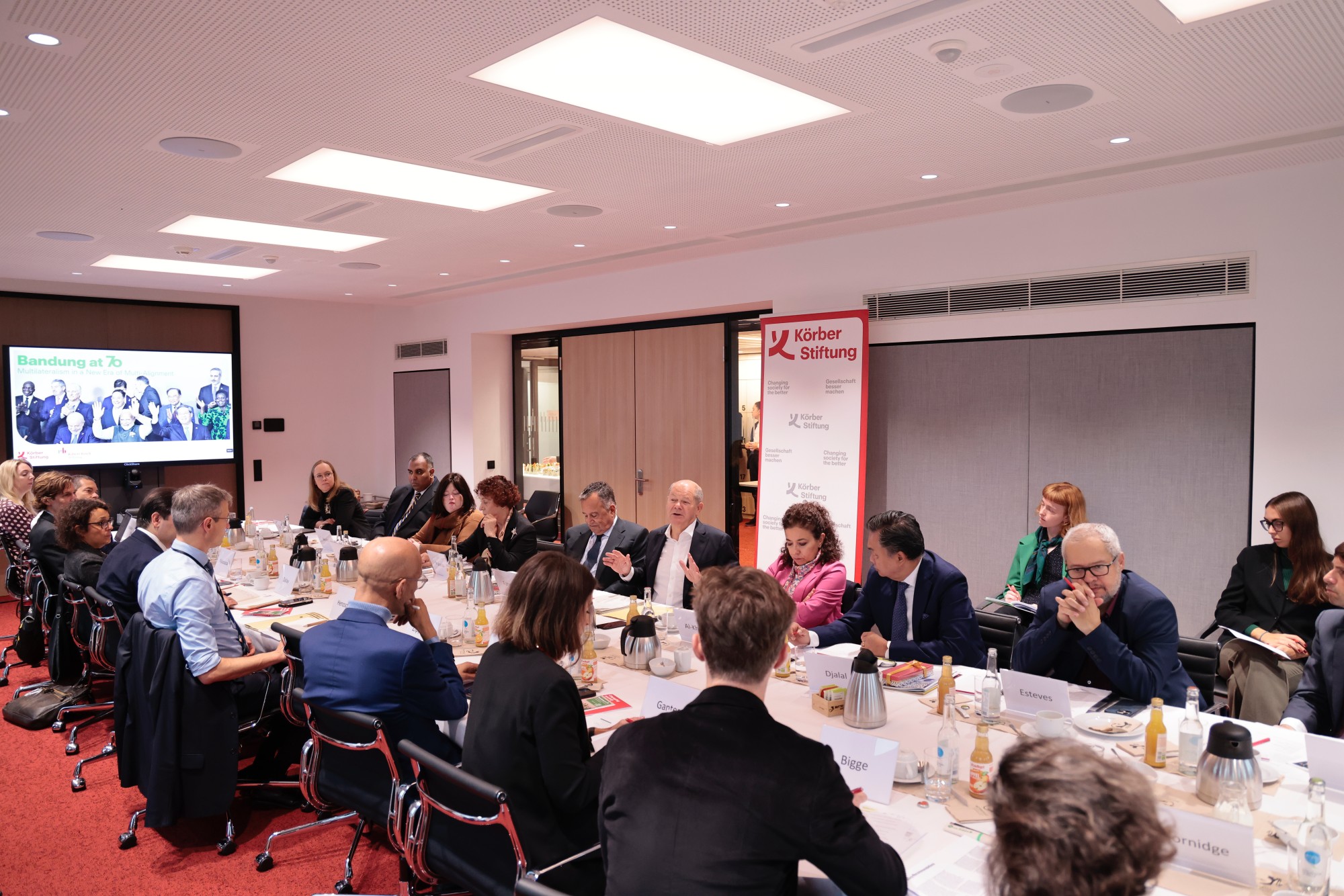
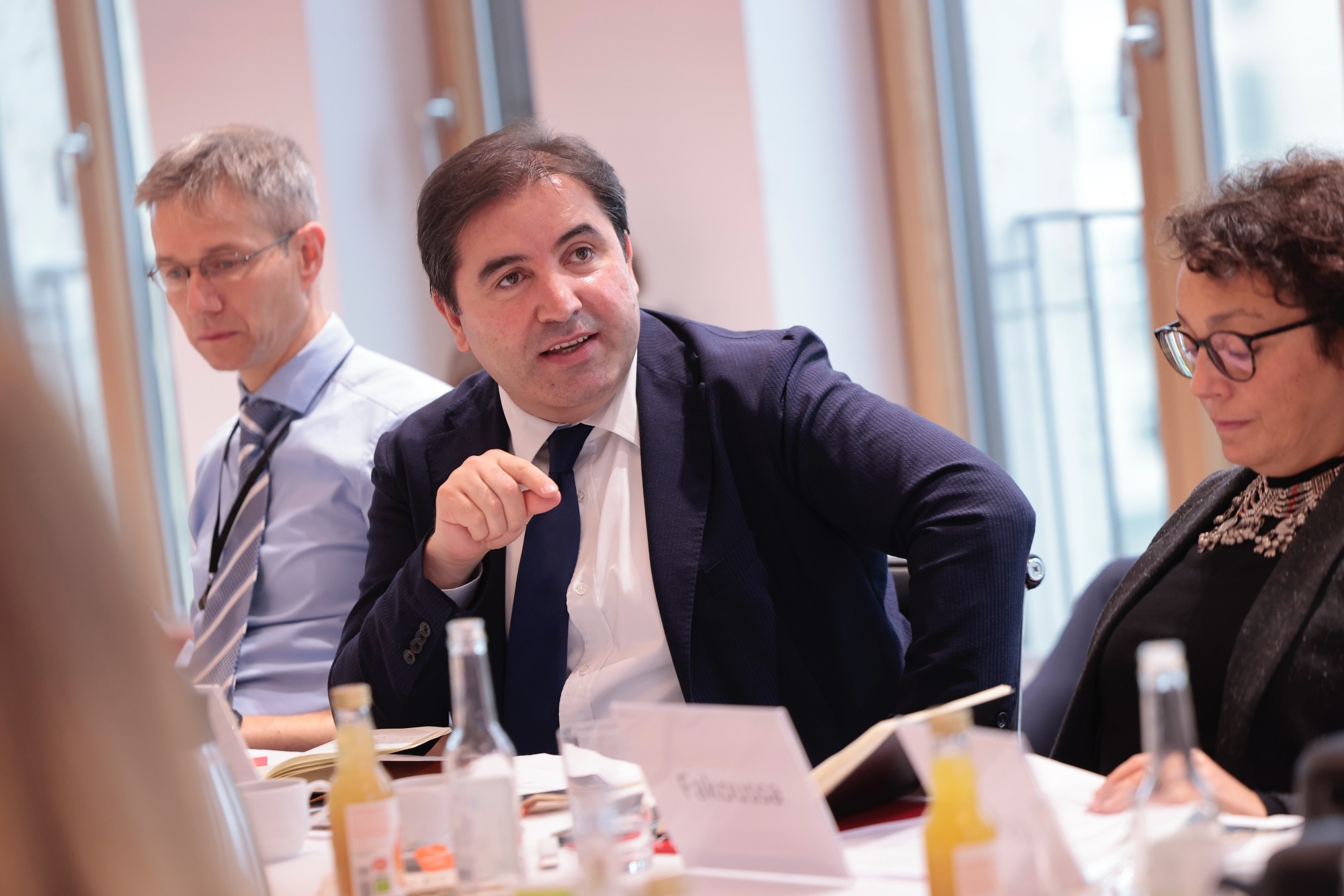
The events and publication are part of a broader initiative examining current geopolitical transformations. Earlier this year, Oxford University (Programme on Global Orders), in cooperation with Körber-Stiftung, BRICS Policy Centre, Chatham House, Foreign Policy Community of Indonesia, Gateway House, and South African Institute of International Affairs, commemorated the 70th anniversary of the Bandung Conference with a roundtable in Indonesia. Building on this conversation, the publication and events in October highlighted the enduring relevance of Bandung's ideas in today's world, which is shaped by multipolarity, fragmented multilateralism and the growing influence of middle powers across regions.
Roundtable Sessions
Speakers: Olaf Scholz (Former German Chancellor; Member of Parliament, Berlin), Dino Patti Djalal (Former Deputy Foreign Minister of Indonesia; Founder, Foreign Policy Community of Indonesia, Jakarta), Dima Al-Khatib (Director, United Nations Office for South-South Cooperation, New York)
Chair: Florian Bigge & Julia Ganter (Körber-Stiftung)
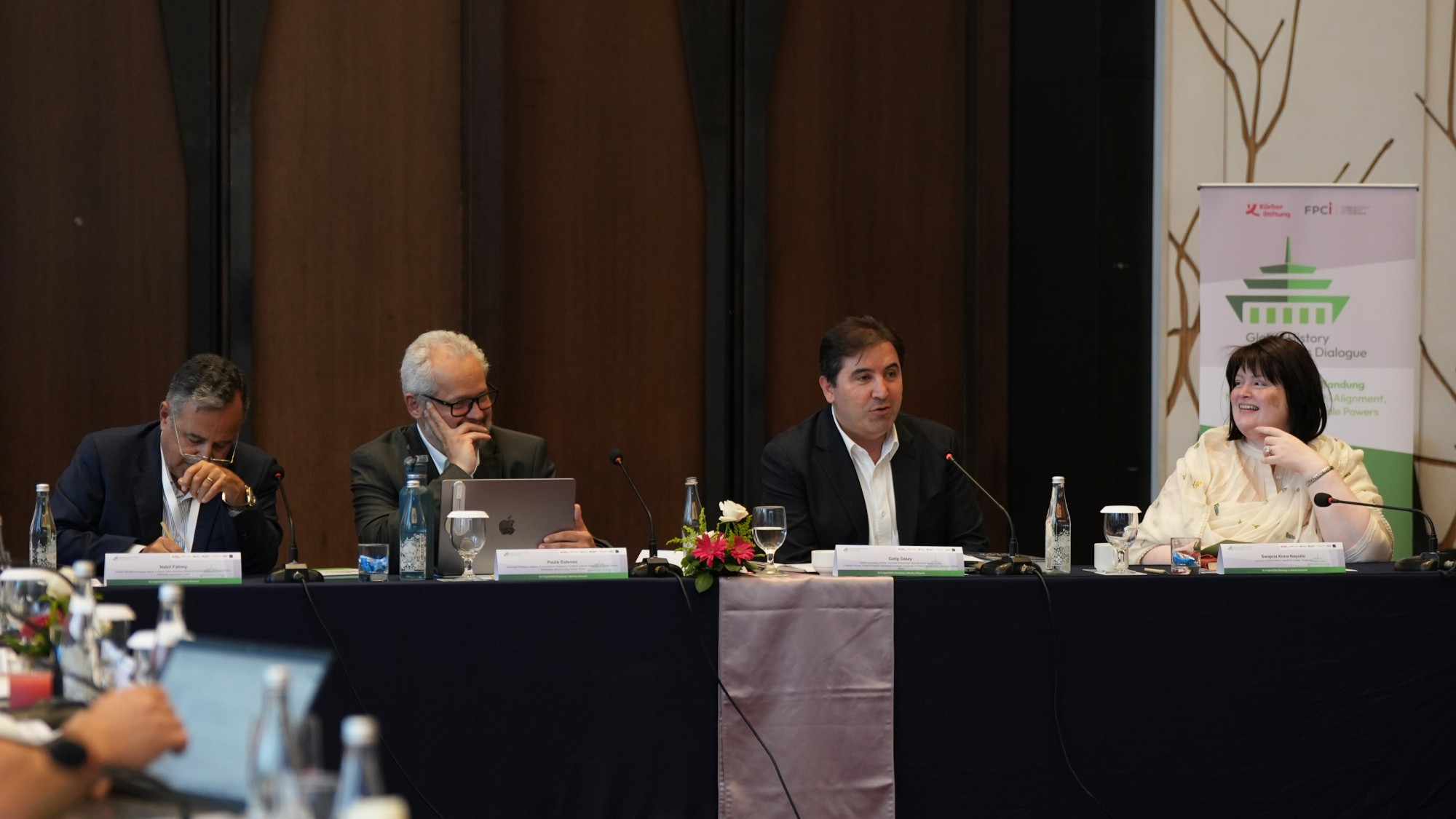
Speakers: Ana Palacio (Former Minister of Foreign Affairs of Spain; Former Senior Vice President and General Counsel, World Bank Group), Nabil Fahmy (Former Foreign Minister of Egypt, Cairo), Swapna Kona Nayudu (Political Scientist & Historian; Author of The Nehru Years, Singapore)
Chair: Galip Dalay (Oxford University and Chatham House)
Guiding Questions
- What kind of multilateralism can work today, and how might Europe and the Global South jointly reimagine it? How can multilateralism become a plausible architecture for an emerging multipolar system?
- How can solidarity be redefined, interests balanced, and institutions adapted so that multilateralism regains credibility beyond power asymmetries?
- How can we shift the narrative away from viewing multilateralism as a "Western legacy" towards a shared practice rooted in diverse contributions?
- What role should Europe play in upholding international law, reforming institutions and rebuilding trust with non-aligned and Global South actors?
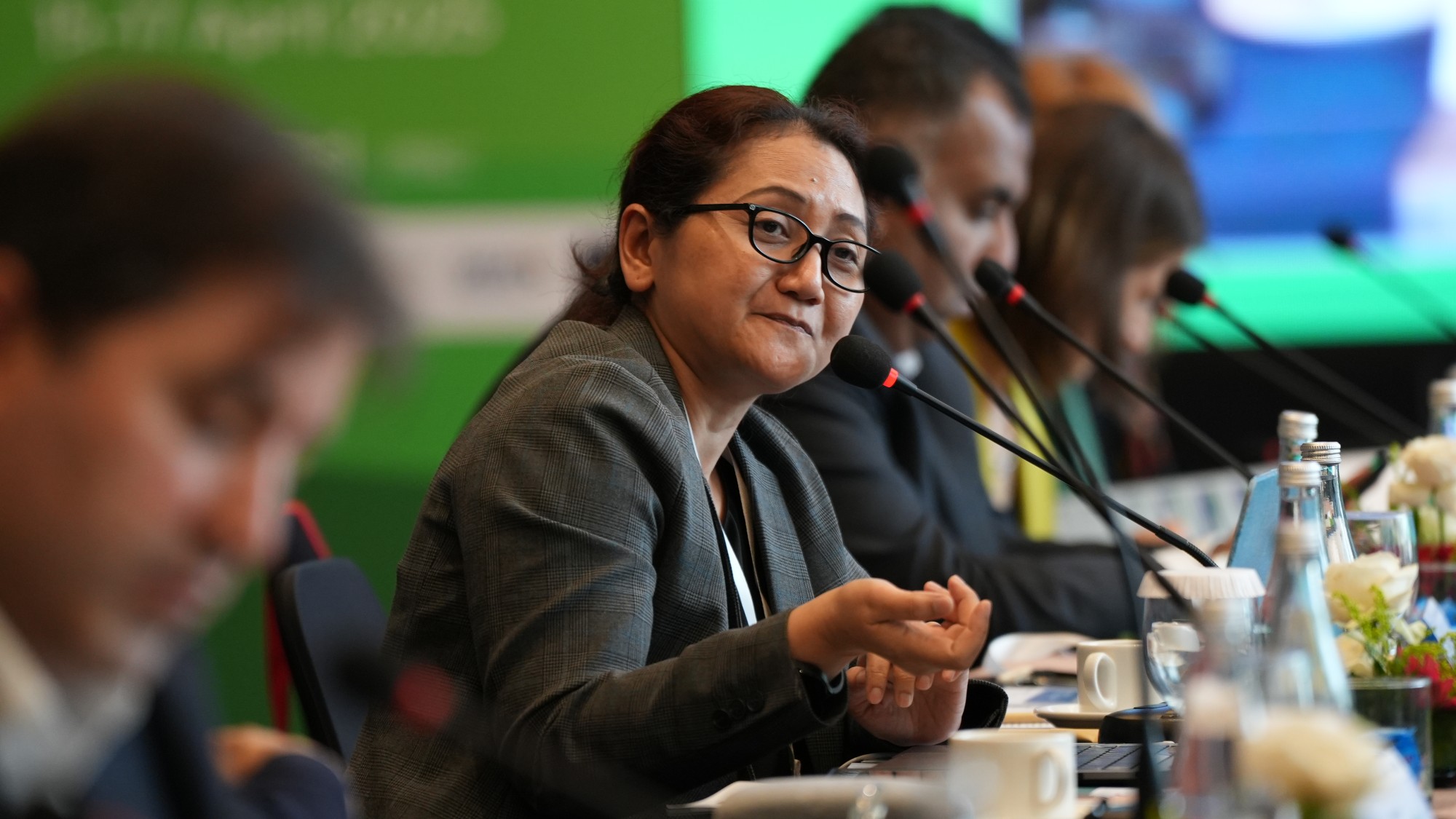
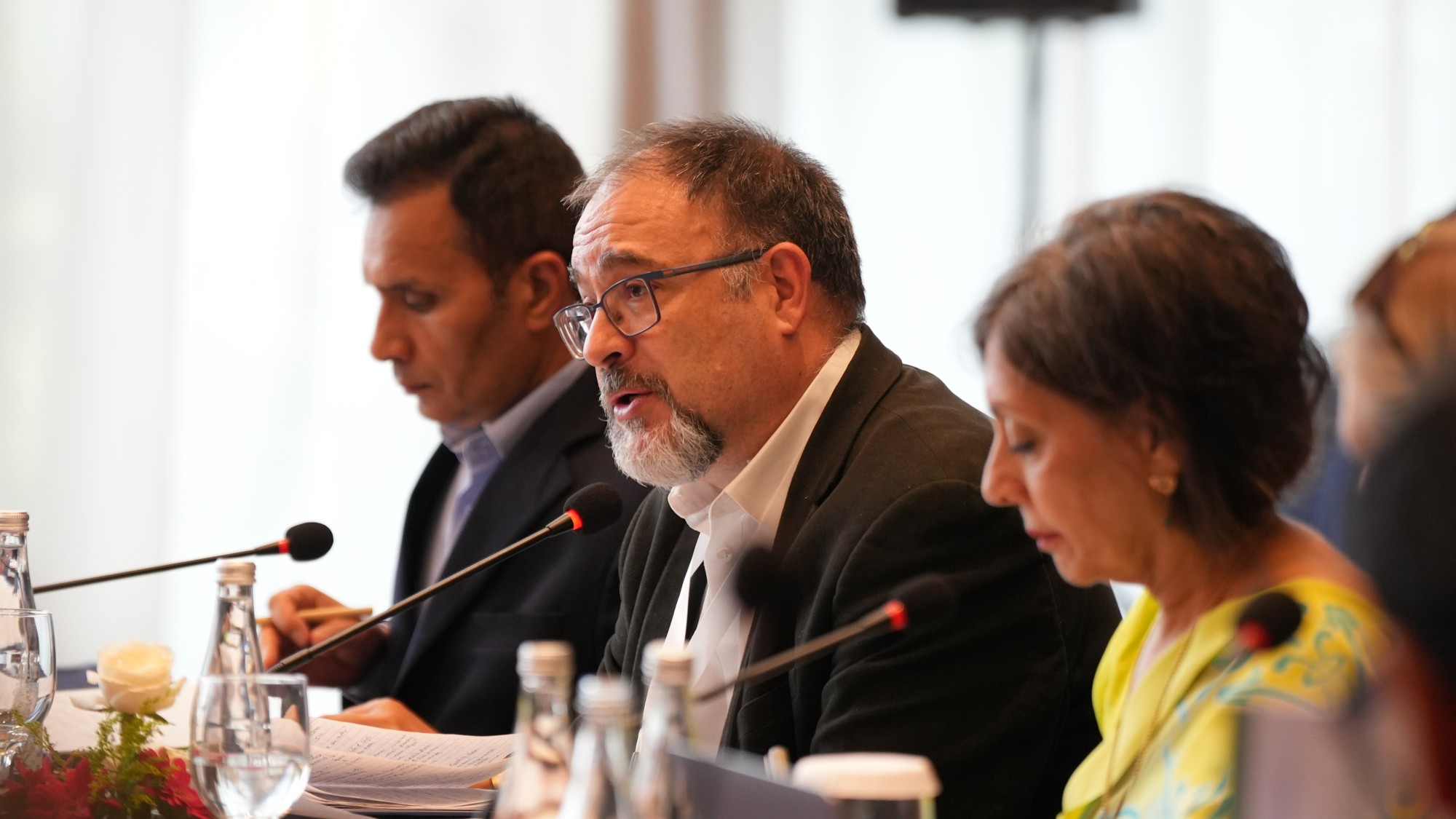
Event Gallery
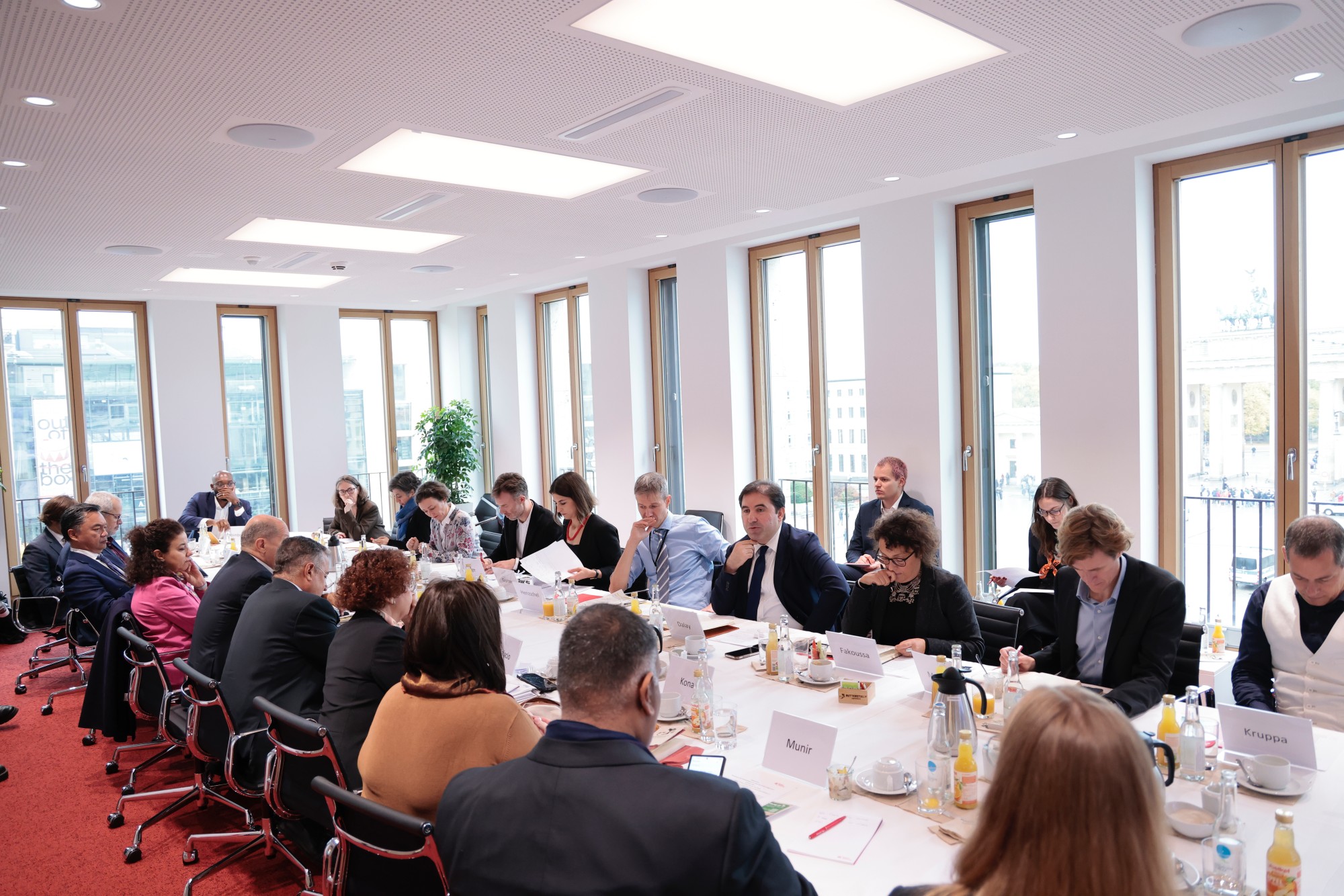
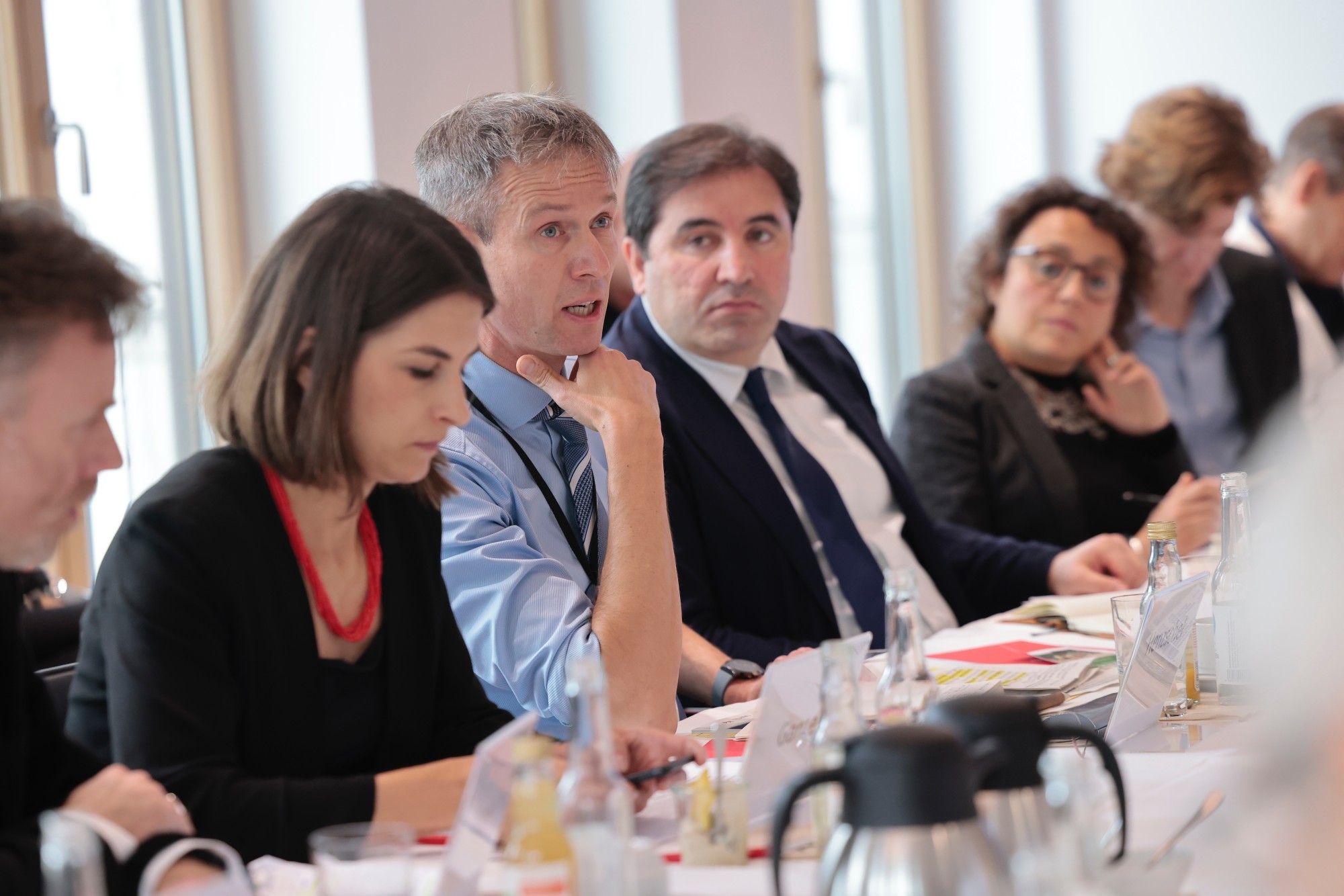
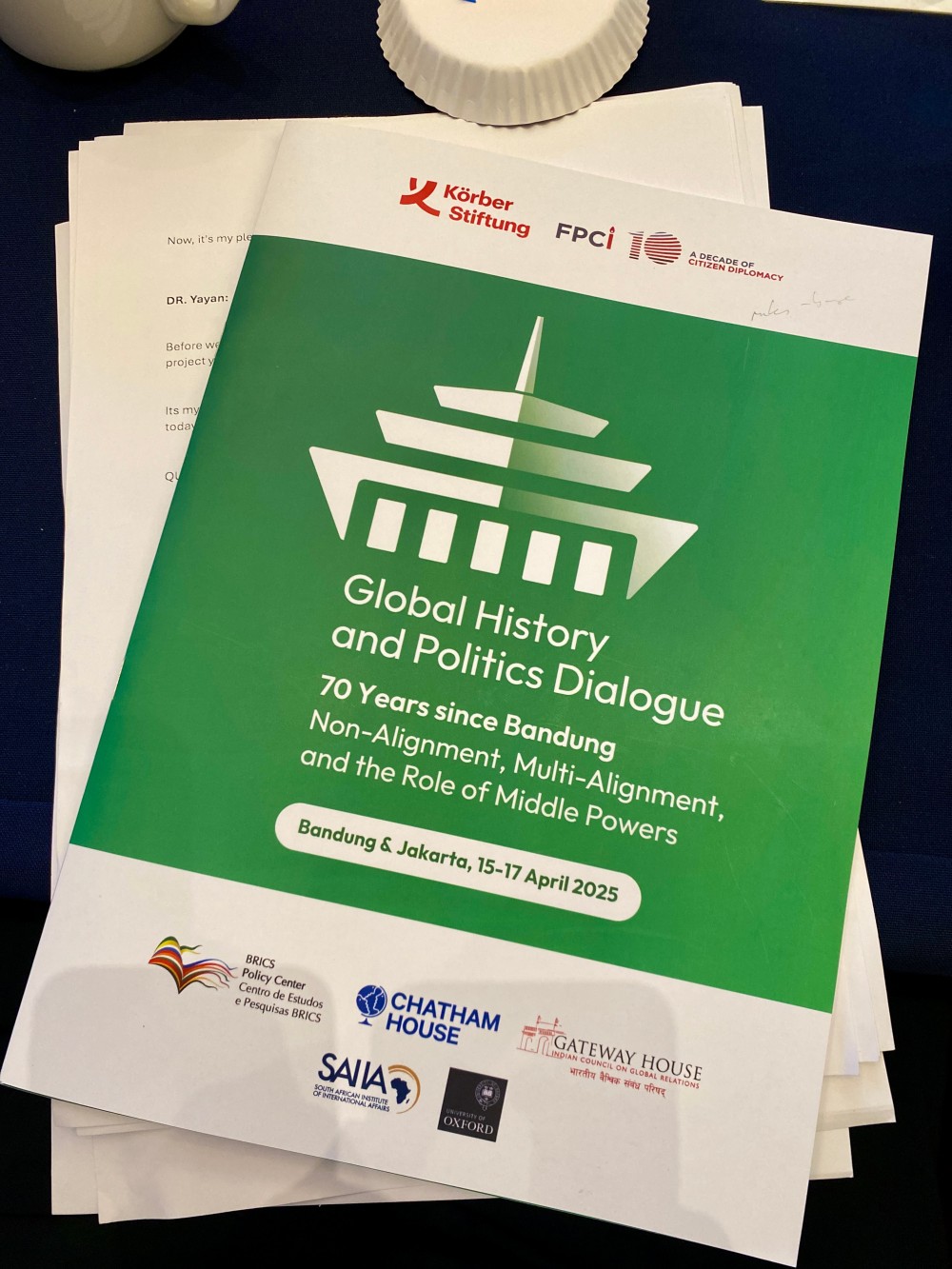
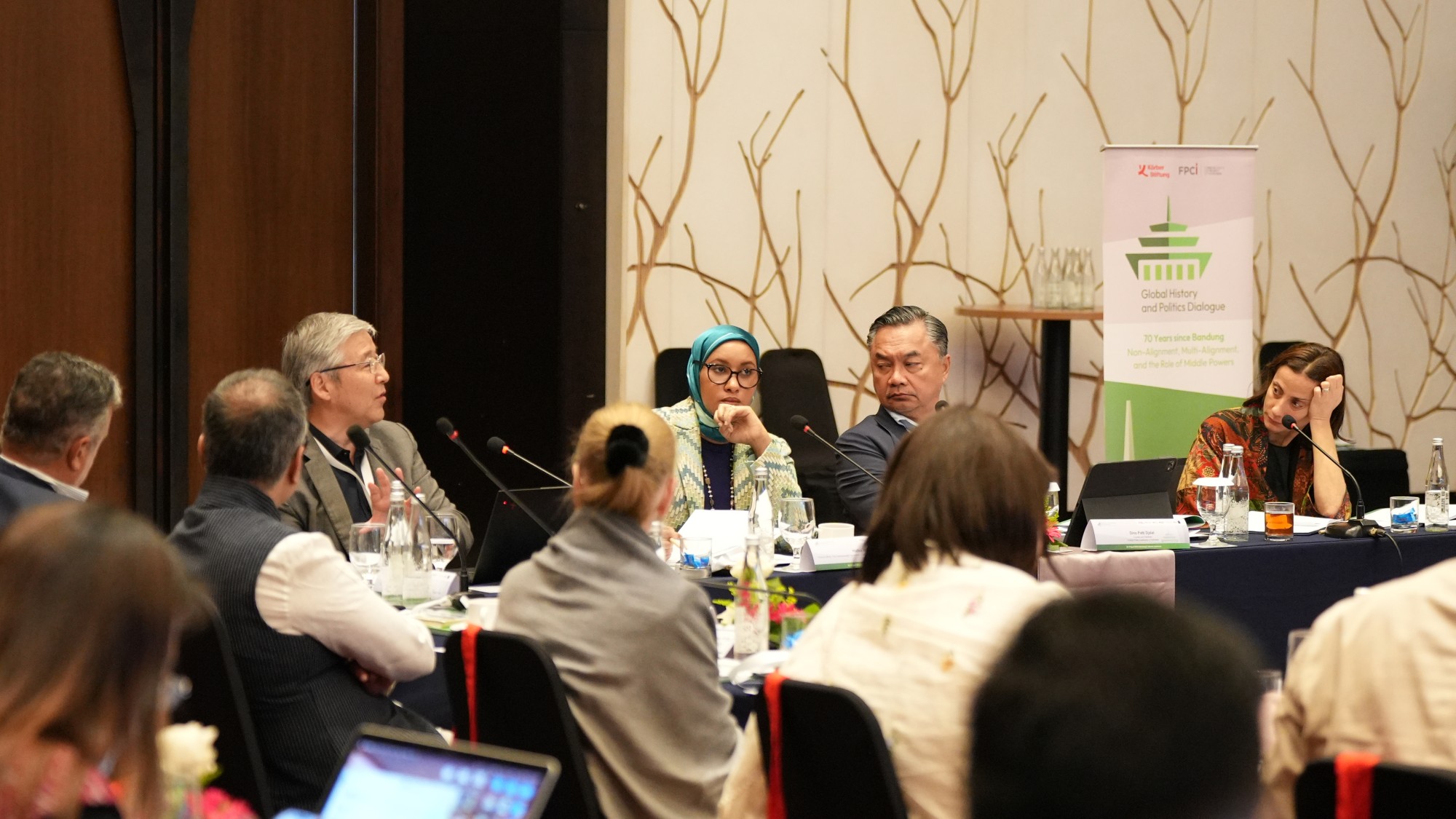
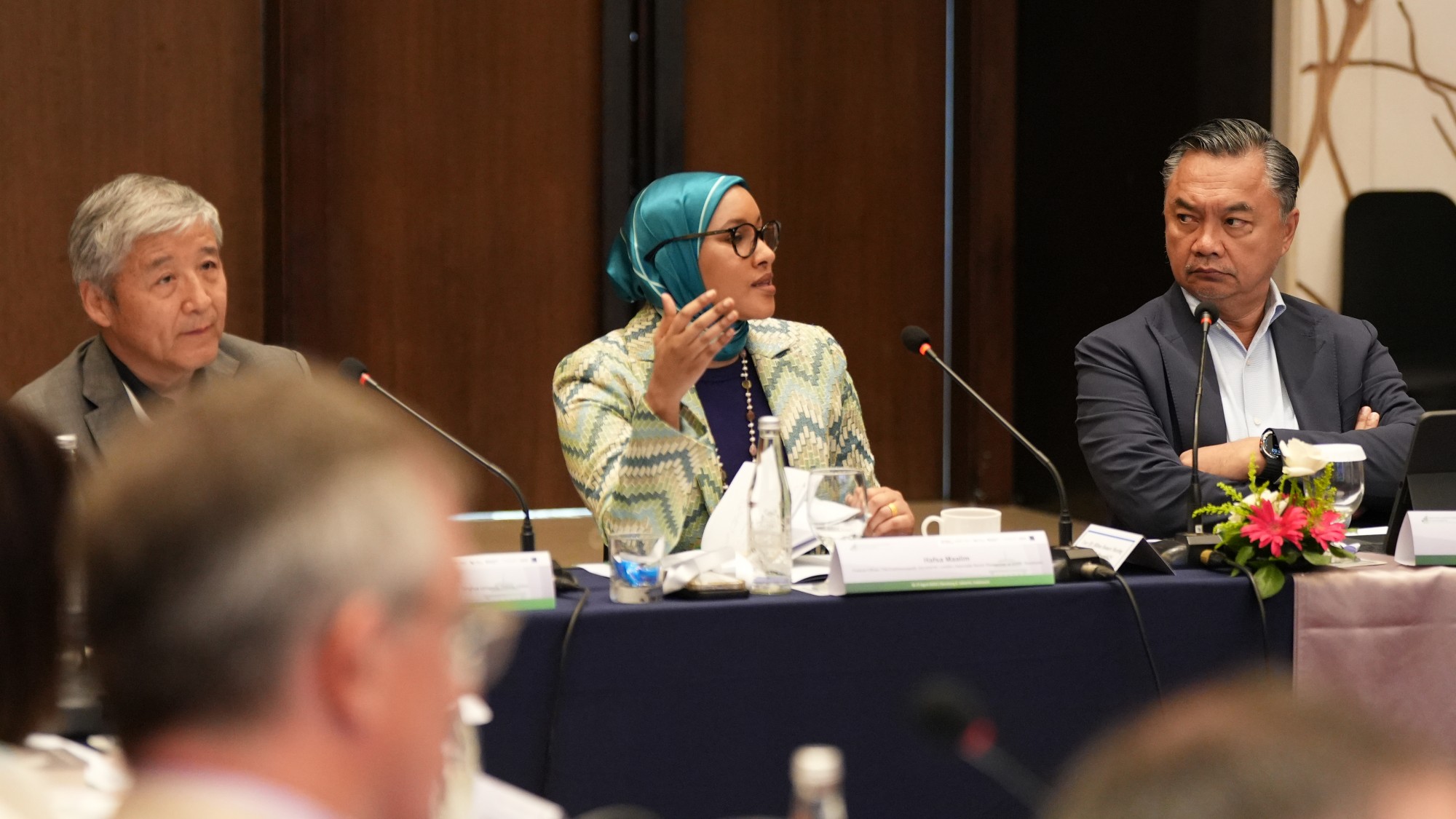
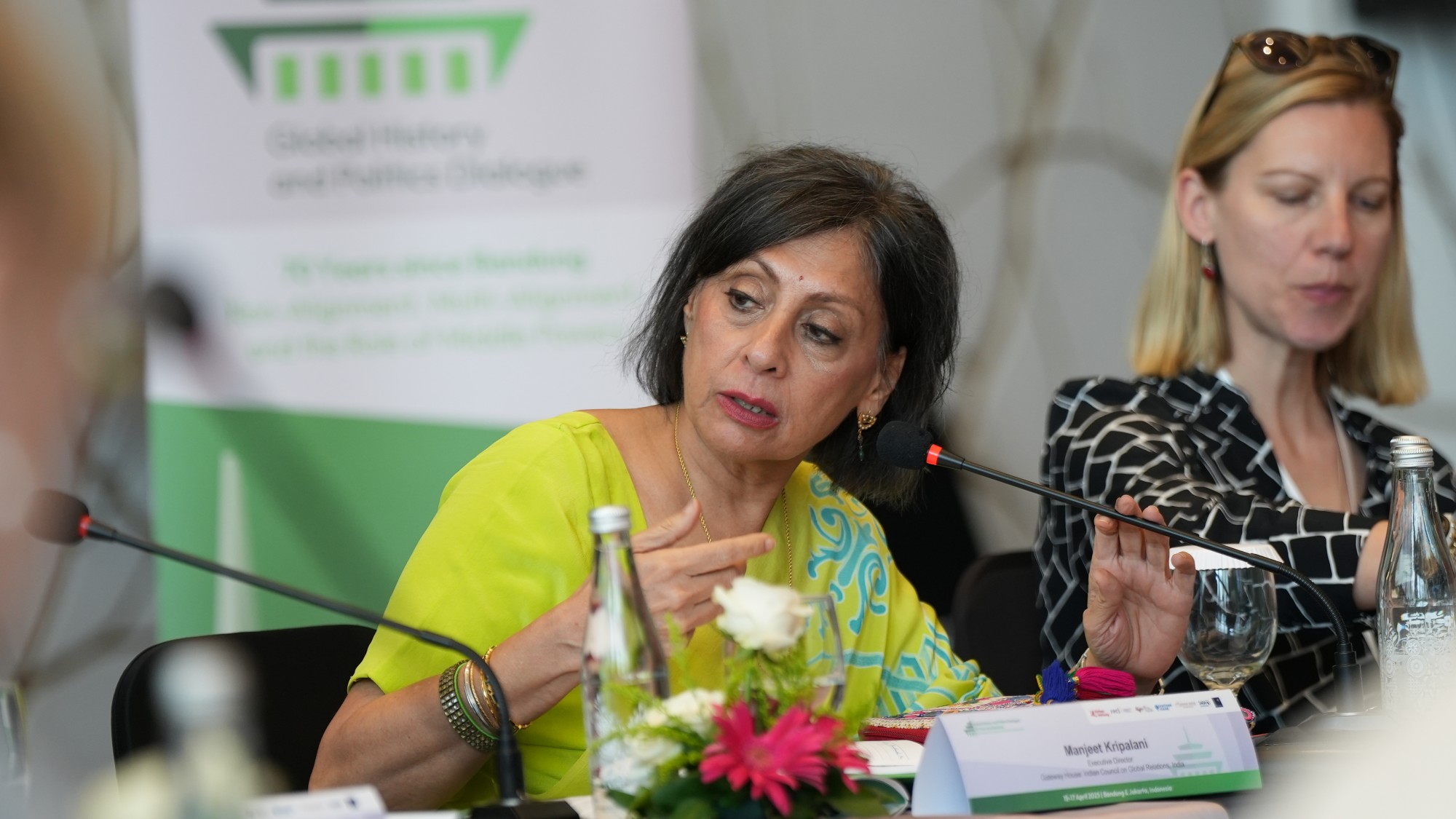
70 Years since Bandung: Non-Alignment, Multi-Alignment, and the Role of Middle Powers
Workshop
Abstract
The workshop will commemorate the 70th anniversary of the first Asian-African Conference in Bandung by examining its relevance to today's global geopolitical strategies as well as its historical influence on the countries in the Global South. It provides a space to engage with expert opinion polling (based on the Emerging Middle Powers Report) and historical contexts to better understand and address current challenges as well as to discuss strategic thinking in middle powers of the Global South and North. This event is organised in cooperation with Körber-Stiftung, BRICS Policy Centre, Chatham House, Foreign Policy Community of Indonesia, Gateway House, and South African Institute of International Affairs.
Guiding Questions
- How have middle powers adapted their foreign policy strategies from non-alignment to multi-alignment? What are the challenges and opportunities of multi-alignment in a multipolar world?
- What are the concerns and priorities of middle powers in the Global South with regard to cooperation with Europe?
- What historical perspectives from the Global South are missing in mainstream international relations debates?
- How can the integration of historical contexts from the Global South lead to a more nuanced understanding of multipolarity?
- How has the legacy of the Bandung Conference influenced regionalization?
Event Gallery